
Are Stars and Galaxies Life Like Systems?
If you define life as a self-maintaining, energy-processing process, stars and galaxies start to look uncomfortably close. The sticking point is Darwinian evolution: heritable information and reproduction with variation.
Posted by

Could Stars and Galaxies Be Alive?

Image credit: Wikimedia Commons

When people ask whether life might exist outside planets, they usually mean “somewhere else with liquid water.” Maybe on a moon. Maybe under an ice crust. Still basically Earth biology, just relocated.
But if you loosen the grip of carbon chauvinism—and stop treating planets as the default container for “life”—the question gets stranger fast. Not stranger in a sci‑fi way. Stranger in a “physics already does weird things” way.
So here’s the more dangerous version of the question:
If life is fundamentally about organized, self-maintaining processes that use energy, respond to their environment, and propagate patterns over time… could stars and galaxies qualify?
Not as a poetic metaphor. As an actual category problem.
What “life” means when you stop worshipping carbon
If you strip away the Earthly specifics, a lot of definitions of life converge on a few functional traits:
- Maintains structure far from equilibrium (it doesn’t settle into boring thermodynamic sameness)
- Processes energy (a metabolism-like throughput)
- Responds to stimuli (some kind of environmental coupling)
- Stores and transmits information
- Reproduces or self-propagates
- Evolves (variation + inheritance + selection)
None of those require a planet in principle. None of them require carbon in principle. Carbon is just ridiculously good at building complicated, stable molecular machines under common conditions.
Once you accept that, the universe stops looking like “dead space with a few wet oases” and starts looking like a place full of organized processes—some of which might meet a non-parochial definition of “alive.”
Non-planetary life: the unsettling plausibility
Before jumping to stars and galaxies, it helps to name the broader idea: life could exist in environments that don’t look remotely biological to us.
A few examples that come up when you take the physics-first approach seriously:
- Plasma-like or electromagnetic life in stellar atmospheres or magnetospheres: self-organizing plasma structures (filaments, double layers) can form boundaries, exchange energy, and persist as patterns.
- Ultra-slow life in interstellar clouds: enormous timescales, low densities, chemical complexity on dust grains, and energy gradients from radiation or shock waves could support evolution that runs on millennia-long cycles.
- Vacuum or near-vacuum informational life (high speculation): if information can be encoded in charge states, spin states, crystal defects, or other physical degrees of freedom, then “life” might be about pattern persistence more than wet chemistry.
You don’t have to believe any specific version of this to absorb the core shift:
Life might be more like a process than a thing.
Not a bounded organism with a clear body, but a persistent storm of organization.
Stars as life forms: where the analogy actually works
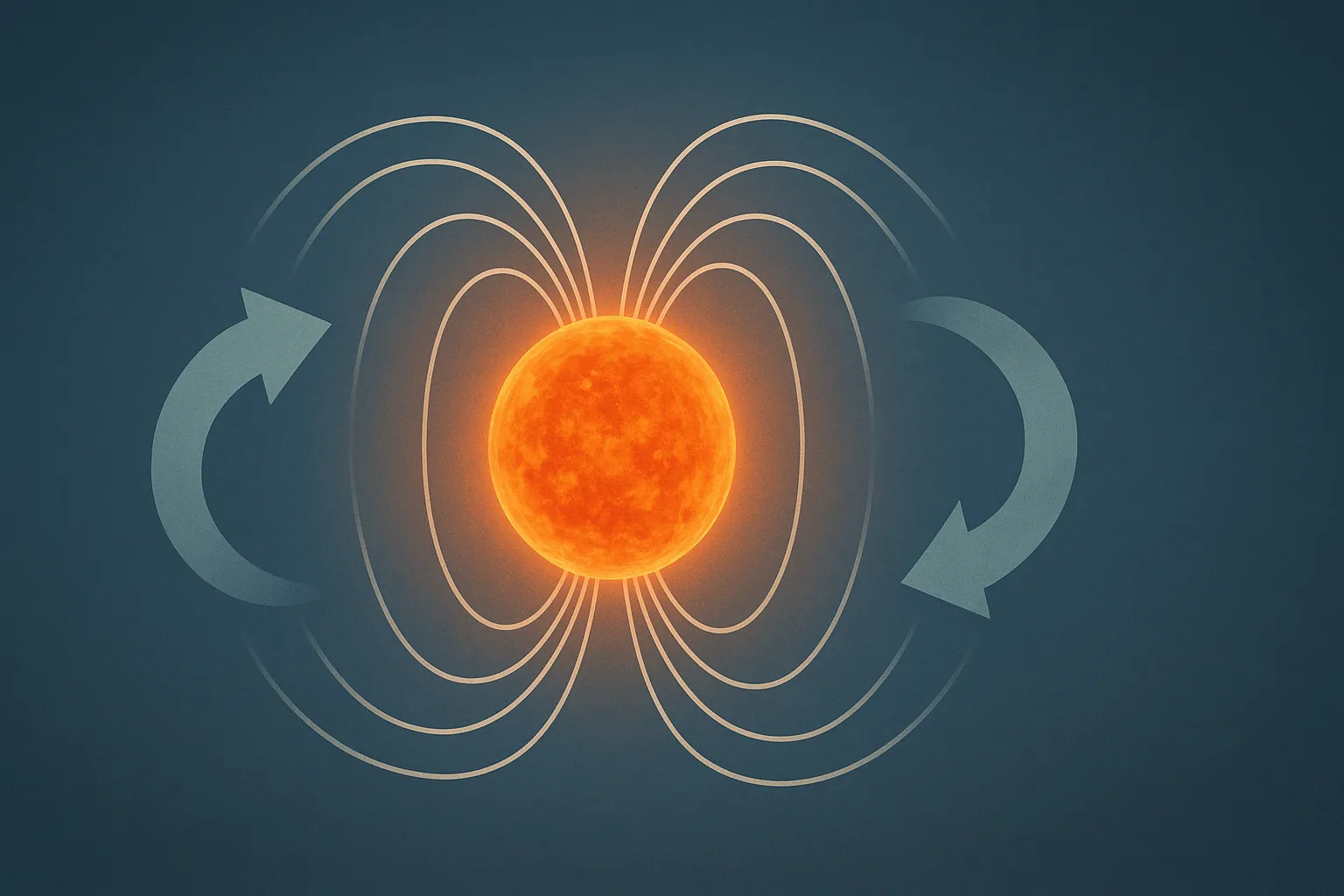
A star is not an inert rock. It’s a self-regulating energy-processing structure that can persist for an absurd length of time. If you squint, it starts ticking boxes.
Stars:
- Maintain themselves far from equilibrium: they’re not “resting,” they’re actively resisting collapse through ongoing energy output.
- Process energy: they consume fuel and output radiation—metabolism-like in the loosest functional sense.
- Have lifecycles: birth, long stability, dramatic end states.
- Exhibit feedback loops: fusion rate, gravity, pressure, convection, magnetic cycles. Push one parameter and the system responds.
If your definition of life is mostly about energy flow and self-stabilization, a star looks… oddly close. Not a dead object. A dynamic process with a long-lived identity.
That said, this is also where the analogy hits a wall.
Where “stars are alive” breaks down
If you’re not careful, you end up calling a candle flame an organism. And the reason you don’t normally do that is the missing ingredient: information-driven reproduction and open-ended evolution.
Here’s what stars don’t clearly have (at least not in the sense life requires):
- Genetics or an equivalent: no obvious information storage system that functions like heredity.
- Reproduction with inheritance: a star doesn’t make baby stars that carry its traits the way organisms do. “New stars form” is not the same as “this star replicates itself with variation.”
- Evolution by selection: stars vary and populations change, but largely because physics plays out—not because there’s an adaptive competition to preserve a lineage.
So a star ends up in a weird middle category: a metabolizing, self-stabilizing process that is life-like in some respects, but not an organism in any strict sense.
A useful mental anchor: a star is closer to a very sophisticated fire than a cell.
Impressive, structured, self-sustaining—yet not obviously a Darwinian information machine.
Galaxies: less like organisms, more like ecosystems
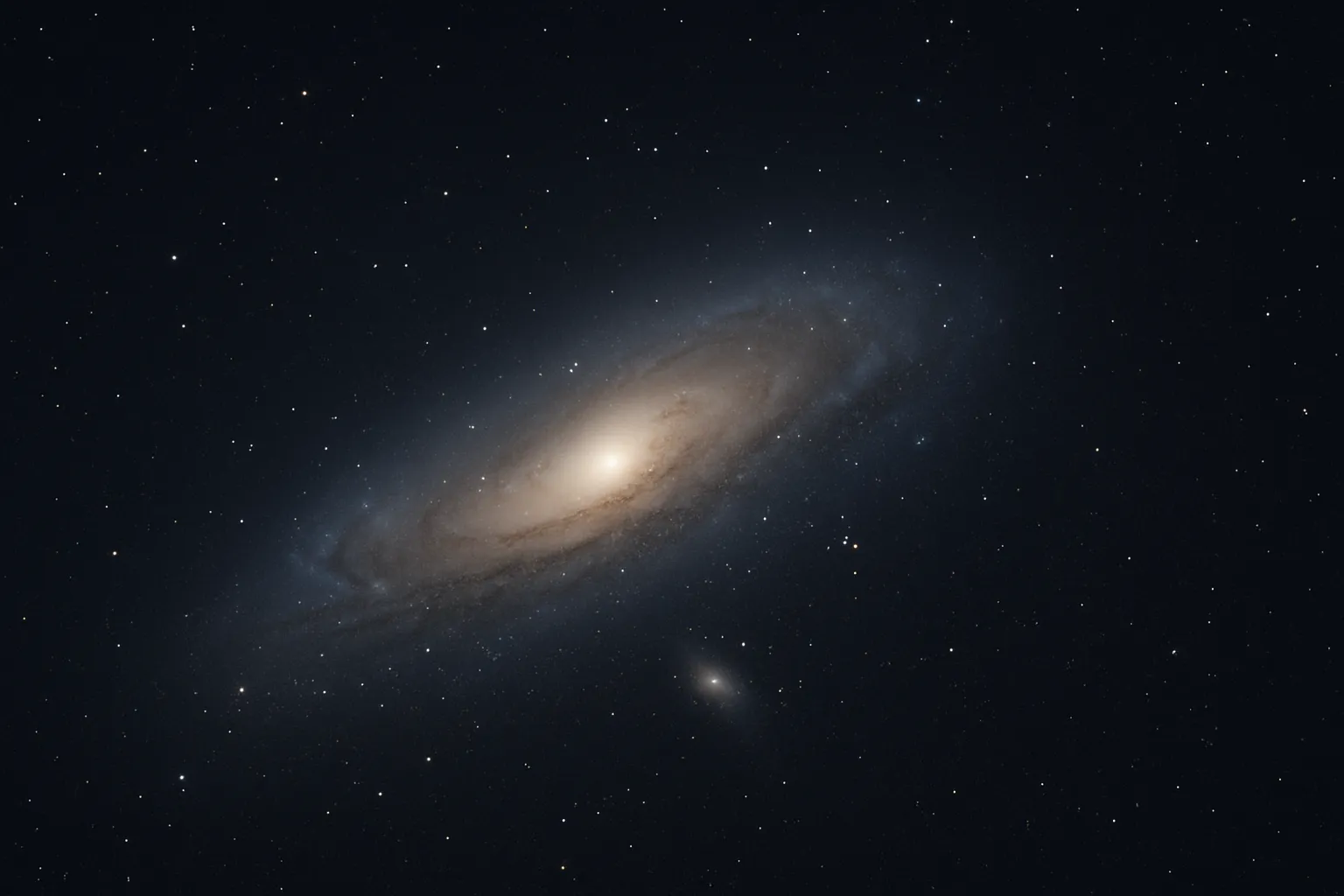
Galaxies are where the question gets more interesting, because galaxies aren’t a single coherent “body” in the way a star is. They’re sprawling systems with internal cycling, feedback, and long-term identity. They behave less like objects and more like environments that regulate themselves.
In the life-like column, galaxies:
- Exchange matter and energy with their surroundings (they’re open systems).
- Maintain structural identity over long periods (they persist as recognizable entities).
- Regulate internal activity via feedback (for example, mechanisms that can suppress or enhance star formation).
- Persist for billions of years (which makes “slow life” less laughable).
- Exist within populations that influence each other (interactions, mergers, environmental effects).
That starts to sound less like a single creature and more like something ecological: a forest, a reef, a biosphere.
Still, the missing pieces remain stubborn:
- No clear replication mechanism: galaxies don’t reproduce by copying themselves.
- No obvious heritable code that mutates and accumulates through selection.
- Change is often passive: driven by external conditions and physical dynamics, not internal adaptation with lineage continuity.
So if a star is “life-like fire,” a galaxy is “life-like ecology”—a self-organizing system that hosts complex dynamics, but doesn’t cleanly map onto organismhood.
A hierarchy problem: life has layers
Part of the confusion here is that “life” isn’t a single scale. It stacks.
You can think in layers like this:
- Chemical layer: cells and molecular networks
- Organism layer: animals, plants, single creatures
- Ecological layer: forests, reefs, microbiomes
- Planetary layer: Earth-like coupled systems (Gaia-style thinking)
- Cosmic layer: large-scale structures like galaxies and the cosmic web
Stars and galaxies might not be organisms, but they could be:
- proto-life (life-like dynamics without full Darwinian machinery),
- scaffolding (the environment in which other kinds of life emerge),
- or life-adjacent dissipative systems (organized structures that exist because they’re good at processing gradients).
The question then isn’t “Are galaxies alive like animals?” That’s a category error.
The sharper question is: Where does life begin on the spectrum of self-organizing energy-processing systems? And how much of “life” is about the substrate versus the pattern?
The clean distinction that keeps you honest
One line helps separate poetry from something closer to science:
Life evolves to preserve itself. Stars and galaxies persist because physics allows them to.
That doesn’t prove stars and galaxies can’t be alive under some future theory. It does highlight what’s currently missing: not energy flow, not structure, not persistence—selection acting on heritable information.
Without that, you can call a star “life-like” and still be saying something meaningful. But calling it “alive” in the full sense becomes more of a philosophical statement than a scientific one.
The truly uncomfortable possibility
Even if stars and galaxies aren’t organisms, they might still host something that is. And not in the “aliens built a Dyson sphere” sense. In the “intelligence could be distributed and process-based” sense.
If life can be more like a persistent pattern than a bounded creature, then the door cracks open to systems that don’t have a central body, don’t have a face, don’t speak, don’t build cities—and still count as aware, responsive, evolving.
That’s the part that makes the question hard to put down once you pick it up.
Conclusion
Stars and galaxies fit some of the functional traits we associate with life: they process energy, self-organize, persist, and respond through feedback. What they don’t clearly show is the Darwinian core—heritable information and reproduction with variation that drives open-ended evolution. So the most defensible stance is that they’re life-like processes or ecosystems, not organisms. Still, expanding the definition forces an honest confrontation: “alive” may be a spectrum, and we may be biased toward forms that look fast, wet, and familiar.