
From Writing to Voice Authoring
ThinkInPublic is shifting from copy-pasted AI text to voice-first authoring, separating original thought from the work of presentation. The goal is to let people speak messily while AI handles structure, clarity, and polish.
Posted by

Why ThinkInPublic Is Moving From Writing to Voice Authoring
I’ve decided to move ThinkInPublic away from a workflow built around copy-pasting text from ChatGPT. Instead, I want to enable authoring through voice.
That distinction—between writing and authoring—is central to what I’m trying to build.
Writing is not just about having something worthwhile to say. It also requires knowing how to structure an argument, introduce an idea, choose the right words, manage pacing, remove repetition, and turn a messy thought into something another person can follow.
Those are valuable skills. But they are not the same thing as having an original thought.
For a long time, the two have been bundled together. If you wanted to publish an idea, you needed both the idea and the ability to present it. The quality of the presentation often determined whether anyone took the underlying thought seriously.
AI gives us a chance to separate those two things.
Writing Comes With a Presentation Tax
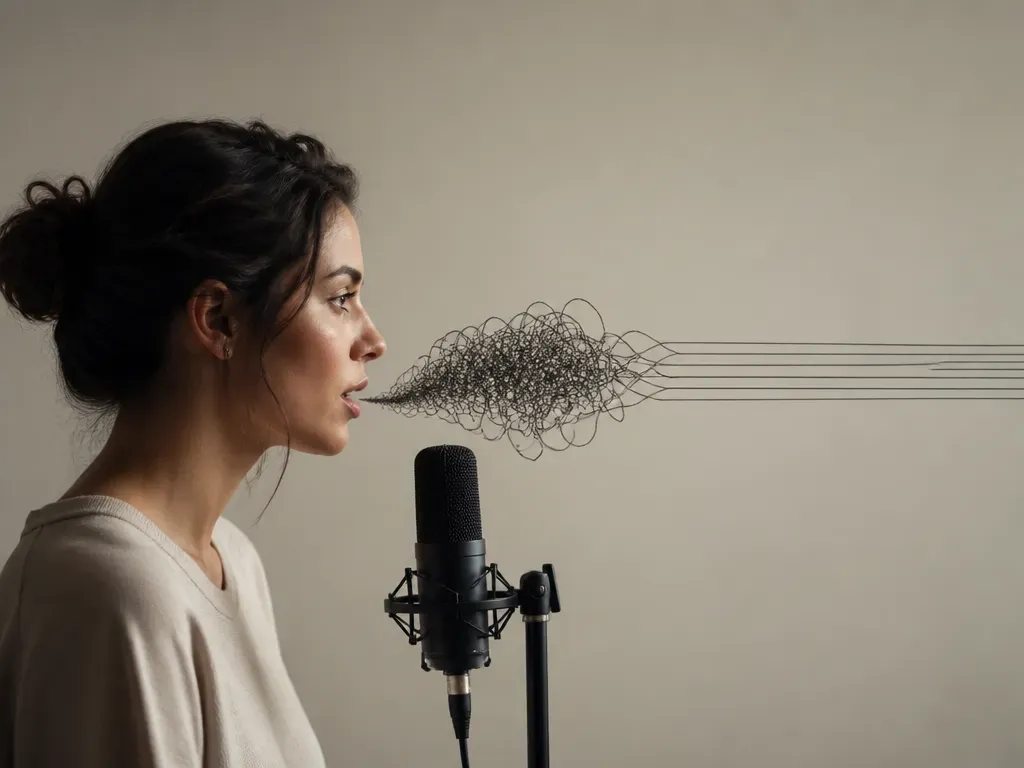
When I sit down to write, I’m rarely thinking only about the idea itself.
I’m also thinking about questions like:
- How should I begin?
- What is the right structure?
- Is this paragraph too long?
- Am I repeating myself?
- Does this sound clear?
- Is this the right word?
- Will someone understand what I mean?
- Is this polished enough to publish?
All of that creates a kind of presentation tax.
You may have a useful observation, a strong opinion, or an idea that came directly from your own experience. But turning it into a clean piece of writing requires another set of abilities. It also takes time and energy that could have gone into thinking more deeply about the idea.
For professional writers, that work may be part of the craft. But for everyone else, it can become an unnecessary barrier.
A person can know something important without knowing how to turn it into a polished article. Someone can have years of experience in a field and still struggle to structure a blog post. Another person may be able to write beautifully while having very little original to say.
Our publishing tools tend to reward the second person.
I want ThinkInPublic to make more room for the first.
The Value Is in the Thought
AI is extremely good at the presentation layer.
It can clean up sentences, organize scattered points, remove unnecessary repetition, add headings, and create a readable flow. It can take language that is rough, incomplete, or spoken casually and shape it into something coherent.
That changes where the real value sits.
If the presentation can increasingly be handled by a system, then the scarce part is no longer the ability to make prose look polished. The scarce part is the thought itself: the observation, judgment, experience, argument, question, or connection that came from a real person.
That is what I mean by authoring rather than writing.
Authoring begins with having something to say. It does not require the first version of that thought to arrive in a publishable form. It can come out with pauses, repetition, unfinished sentences, and moments where the speaker changes direction halfway through.
That messiness is not a failure. It is often what thinking actually looks like.
The job of the tool should be to preserve what is original in that thought while removing the friction involved in presenting it.
Voice Is Closer to How Thoughts Emerge
Voice is a natural interface for this kind of authoring.
When speaking, people do not have to stop every few seconds to evaluate the sentence they just produced. They can follow the shape of an idea as it develops. One thought leads to another. A comparison appears. A stronger way of describing the problem comes out on the second attempt.
The result may not be clean, but it often contains more of the person.
Traditional writing encourages editing at the same time as creation. You write a line, reread it, question it, rewrite it, and sometimes lose the energy of the original idea in the process. The demand for polish arrives before the thought has had room to fully form.
Voice allows the raw thought to come first.
The person can speak. The system can then handle structure and presentation. Those stages no longer have to compete with each other.
This is especially important for ThinkInPublic because the platform is not supposed to be a place where people simply paste generic AI output. The point is not to produce more text for its own sake. There is already no shortage of polished text.
The point is to help people express thoughts that actually belong to them.
Technology Often Removes Yesterday’s Skills
This kind of shift has happened repeatedly throughout history.
Mental math is an obvious example. Being able to calculate quickly in your head can still be impressive and useful in certain situations. But it is no longer the foundation of serious commercial calculation. We have calculators, spreadsheets, software, and other systems that are faster and more reliable.
The skill did not become completely worthless. It simply stopped being the required interface for getting the result.
That distinction matters.
When technology automates a layer of work, it does not necessarily eliminate the underlying human contribution. Often, it reveals what the contribution actually was.
The important commercial ability was not performing every calculation mentally. It was understanding what needed to be calculated, choosing the right inputs, interpreting the result, and making a sound decision.
Writing may be moving in a similar direction.
The mechanics of presentation—grammar, structure, formatting, transitions, and polish—have often been treated as inseparable from authorship. AI makes that assumption less convincing. A person can provide the substance while a system helps shape the final form.
Some people will describe that as a loss of skill. I see it as the elimination of a lot of useless crap standing between an idea and its expression.
The old skill can remain valuable without remaining mandatory.
Beyond Copy-Pasting ChatGPT
Simply copy-pasting ChatGPT is not the future I want for ThinkInPublic.
That workflow can produce clean content, but cleanliness is not enough. If the process begins with asking AI to generate the thought, the result can easily become detached from any real experience, conviction, or point of view.
Voice authoring changes the starting point.
Instead of asking AI to invent something publishable, the author supplies the raw material. The author speaks from experience, works through an argument, or captures an idea while it is still forming. AI then helps with the part it is good at: presentation.
That creates a clearer division of labor:
- The human provides the original thought.
- The system organizes and refines its expression.
- The final piece remains grounded in what the author actually meant.
This is not about removing humans from writing. It is about removing unnecessary mechanics from authorship.
Building for Messy Original Thought
The platform I want to build should accept an original thought no matter how messily it comes out.
It should not require someone to become a skilled writer before they are allowed to communicate what they know. It should not confuse polished language with valuable thinking. And it should not turn AI into a machine for filling the internet with more generic words.
Voice authoring is a step toward that goal.
The future of publishing should not belong only to people who have mastered the presentation layer. It should also belong to people with something real to say. ThinkInPublic is being built to help those thoughts survive the messiness of their first expression and become clear enough to share.