
Hatred Isn’t Why Conflicts Last
History shows even the most dehumanizing, identity-level conflicts can normalize when incentives and institutions change. The hard part of Israel–Palestine isn’t uniquely deep hatred—it’s the lack of a structural exit ramp.
Posted by

Related reading
The Rentier State Behind Authoritarianism
Authoritarianism is often blamed on religion when the deeper cause is political economy. States financed by oil, foreign patrons, or illicit markets can survive without taxation—and therefore without accountability to their citizens.
Why Threats Against Judges Cluster Around Power Disputes
Judges aren’t threatened in proportion to a ruling’s moral horror, but to the losing side’s organized, identity-bound capacity to coerce. The antidote is conduct-based enforcement and post-harm incentive forensics—not category-based repression.
Stop Selling Reservation as Welfare: It’s Representation
The reservation debate stays stuck because it’s framed as compensation, poverty relief, or a temporary ladder. A representation-and-reach framing treats it instead as institutional design: building a state that serves every stakeholder it governs.
People love to say certain conflicts are “too ancient” or “too hateful” to ever end. Israel–Palestine is the default example: sacred land, overlapping identities, constant headlines, fresh graves. It feels uniquely doomed.
But history is full of wars where the parties didn’t just dislike each other—they dehumanized each other, tried to cripple or erase each other, and built entire political identities around permanent enmity. And then—sometimes shockingly fast—those relationships normalized to the point that later generations can barely feel the old heat.
That doesn’t mean Israel–Palestine is guaranteed to reconcile. It means “the hatred is too deep” is a weak argument. Hatred has been deeper. The question is what changes the incentives and the structure of the conflict.
France ↔ Germany (1870–1945): Europe’s blood feud that became the EU’s engine
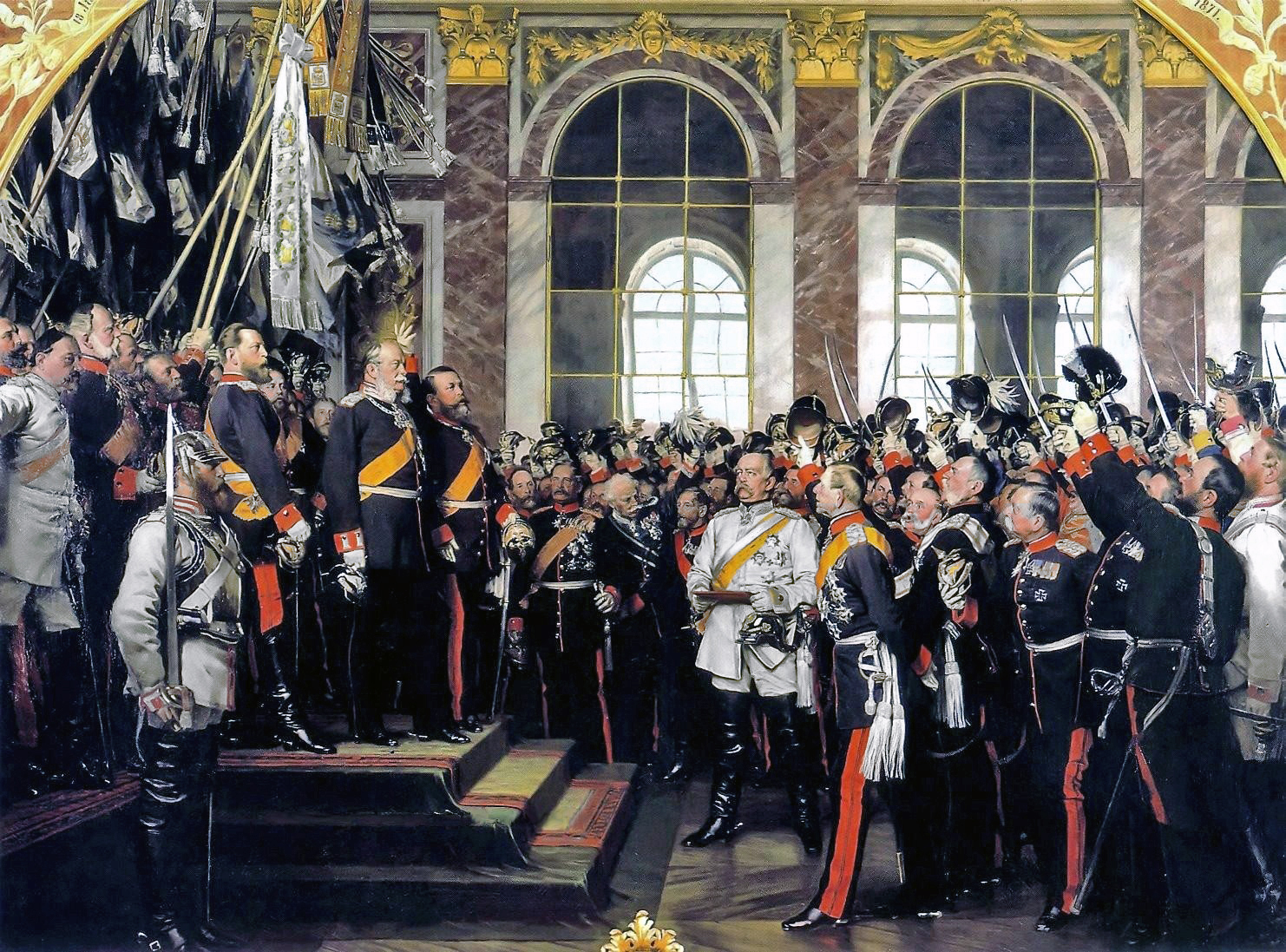 If you want a clean example of “they tried to destroy each other, and now they share institutions,” it’s France and Germany.
For roughly 75 years, they fought three major wars. Borders moved. Millions died. Germany occupied France twice. The resentment after World War I wasn’t subtle: French policy was explicitly aimed at permanently weakening Germany so it couldn’t rise again.
This wasn’t just a polite geopolitical rivalry. It was civilizational and identity-level hatred: schoolbooks, newspapers, veterans, widows—entire societies carrying a sense of humiliation and revenge. People talk about “historic enemies” today as a metaphor; France–Germany was the literal template.
So what changed?
- Post–World War II exhaustion: there was nothing romantic left in the idea of another round.
- American pressure and money: the Marshall Plan didn’t just rebuild cities; it reshaped political possibilities.
- Economic interdependence: tying coal and steel together was a way of tying war-making capacity together.
- Elite-level reconciliation first: leaders moved before public sentiment fully caught up.
Today it’s almost hard to emotionally access how intense this was. France and Germany are framed as the joint motors of European integration. A lot of people, especially younger Europeans, carry only a vague sense that these countries ever tried to cripple each other—because the reconciliation is now part of the landscape.
Japan ↔ United States (1941–1945): racialized total war to security alliance
The Pacific War wasn’t a limited dispute over a border. It was total war, soaked in explicit racial contempt on both sides, and it culminated in mass civilian destruction on a scale that still defines global memory: firebombing, nuclear weapons, atrocities, brutal treatment of prisoners.
That combination—total war plus racial hatred plus civilian annihilation—creates the kind of psychological scar people assume can’t be stitched.
And yet, within a generation, Japan and the U.S. became close allies. Not “cordial.” Strategic partners with deep cultural exchange, trade, and security alignment.
What changed?
- Absolute defeat: the war ended decisively, not ambiguously.
- Occupation and institutional rewrite: the losing side didn’t just sign papers; its system was reconstructed under the victor’s supervision.
- A shared external threat: geopolitical gravity (the USSR, later China) pulled the relationship into a new shape.
The interesting part isn’t that everyone forgot. Many didn’t. The interesting part is that states can build a new normal that slowly makes the old hatred feel unreal in hindsight—like a nightmare you know happened but can’t fully inhabit anymore.
Catholics ↔ Protestants (150s–160s): when theology justified extermination
Modern political conflicts are ugly, but the religious wars of early modern Europe had something extra: the logic of spiritual illegitimacy. If you believe the other side is not just wrong but damned—and that their existence threatens the salvation of your community—compromise starts to look like betrayal of God.
These wars depopulated regions. Civilians were legitimate targets. The violence wasn’t an accidental byproduct; it was woven into the worldview. In places, it looked like society unraveling into massacre and reprisal.
And then it stopped. Not because everyone hugged it out, but because the exhaustion and reality finally overruled the fantasy of total religious uniformity. The Peace of Westphalia is often remembered as a diplomatic milestone, but psychologically it represents something more basic: a collective admission that endless war for spiritual domination was unsustainable.
Today, in much of Europe, Catholics and Protestants coexist with casual normality. Most people don’t carry a living sense that their ancestors treated the other denomination as an existential contaminant. The heat burned out, then faded from cultural memory.
England ↔ France: centuries of war turned into jokes
England and France fought across centuries—dynastic claims, territory, prestige, legitimacy. These weren’t mere “border skirmishes.” They were long arcs of destruction, raids, pitched battles, and systematic ruin of towns and farmland. And the hatred wasn’t purely elite; it filtered into culture, language, myth.
Today, the rivalry mostly survives as comedy: stereotypes, sports banter, mock superiority. The idea of England and France going to war sounds absurd to most people—not because they’ve always been compatible, but because political reality moved on.
What changed?
- The nature of the state changed: dynastic wars gave way to modern nation-state logic.
- External threats reshuffled priorities: geopolitical gravity (eventually Germany) reoriented alliances.
- Normalization through trade and institutions: not one magic treaty—gradual entanglement over time.
This is what reconciliation sometimes looks like in practice: not a single cathartic “peace moment,” but a slow replacement of the entire conflict ecosystem.
Germany ↔ Poland: attempted erasure to (tense) normalization
If the claim is “some wounds are too deep,” Germany–Poland is one of the hardest counterexamples. During World War II, the violence wasn’t just conquest; it was an attempt at cultural and biological erasure. Millions were killed. Cities were flattened. Elites were systematically targeted.
And yet, the relationship normalized enough to function within a shared European framework—imperfectly, sometimes tensely, but still in a realm that would have been unimaginable in 1945.
What helped?
- Germany’s admission of guilt: not a small thing. It matters whether perpetrators deny, justify, or acknowledge.
- Reparations and material rebuilding: money doesn’t heal everything, but it changes what “after” looks like.
- Integration into shared structures: the EU altered incentives and made certain kinds of aggression materially self-destructive.
- Generational turnover: memory doesn’t vanish, but politics changes when the living link to atrocity thins.
This isn’t a fairy tale. It’s precisely the point: reconciliation doesn’t require everyone to feel warm. It requires enough stability, acknowledgment, and incentive alignment that war becomes unthinkable, then unnecessary, then culturally alien.
Why Israel–Palestine feels uniquely hopeless (even if it isn’t uniquely hateful)
The raw hatred in Israel–Palestine isn’t historically unprecedented. What’s unusual is the lack of a structural exit ramp.
A few features keep the conflict emotionally “present tense”:
- It’s unresolved: without a settlement, every injury reads as proof of eternal intent.
- No clear defeat or settlement: ambiguity sustains maximalist fantasies on all sides.
- Sacred geography: land disputes are hard; holy land disputes are radioactive.
- Constant media exposure: daily circulation of images and narratives keeps wounds open and recruits outsiders into the emotional loop.
- No shared external threat forcing cooperation: enemies sometimes reconcile because a bigger threat makes old hatreds strategically expensive.
Historically, durable reconciliation tends to require at least one of the following: total defeat, mutual exhaustion, external guarantors, economic entanglement, or leadership willing to absorb enormous political pain. The bleakness comes from how incomplete those conditions are right now—not from the idea that the hatred is special in the history of human violence.
Conclusion
The line “they’ve always hated each other” is usually something people say until the day they stop saying it. After reconciliation, later generations often struggle to feel the old hatred as real, even when the historical record is explicit. Israel–Palestine may still be far from that kind of pivot, but history is clear on one point: depth of hatred is not the same thing as permanence.