
Military Tech Isn’t the Hard Part—War Feedback Is
China can build impressive hardware, but combat credibility comes from institutional feedback loops: reliability, integration, logistics, and honest after-action learning under real stress. The gap, where it exists, is less engineering than iteration under failure—something India has had more opport
Posted by

Related reading
The Rentier State Behind Authoritarianism
Authoritarianism is often blamed on religion when the deeper cause is political economy. States financed by oil, foreign patrons, or illicit markets can survive without taxation—and therefore without accountability to their citizens.
Why Threats Against Judges Cluster Around Power Disputes
Judges aren’t threatened in proportion to a ruling’s moral horror, but to the losing side’s organized, identity-bound capacity to coerce. The antidote is conduct-based enforcement and post-harm incentive forensics—not category-based repression.
Stop Selling Reservation as Welfare: It’s Representation
The reservation debate stays stuck because it’s framed as compensation, poverty relief, or a temporary ladder. A representation-and-reach framing treats it instead as institutional design: building a state that serves every stakeholder it governs.
“China can’t build good military tech” is the wrong accusation

People say China “can’t build good military tech” as if it’s a pure engineering problem: give smart engineers enough money, wait a few years, and you get a combat-dominant military.
That’s not how modern military power works.
China can build impressive hardware. The real gap—where it exists—is less about making sleek prototypes and more about building reliable, integrated systems that keep working when everything goes wrong for weeks or months. War isn’t a product demo. It’s a stress test designed by nature and executed by people who are tired, scared, and improvising with broken tools.
So if the question is “why doesn’t Chinese military tech inspire the same confidence as US/NATO systems,” the best answer is: because confidence comes from iteration under fire, not from parades, simulations, or controlled trials.
Where China is clearly strong—and where the doubts cluster
China’s strengths aren’t imaginary. It has areas where it looks genuinely formidable:
- Missiles and rocketry (including hypersonics)
- Drones (cheap, scalable, mass-production capable)
- Shipbuilding speed (huge industrial capacity)
- Electronics manufacturing (broad competence and volume)
But the recurring skepticism shows up in a few places:
- Jet engines (historically the weakest link)
- Sensors + software integration
- Battlefield networking (real-time data fusion across services)
- Reliability over long combat cycles
A system can look excellent in a clean environment and still be fragile when subjected to months of operational tempo, maintenance strain, battlefield damage, electronic warfare, supply disruption, and human error.
That’s the difference people are pointing at—sometimes clumsily—when they say “they can’t build good tech.” It’s not that China can’t build anything good. It’s that nobody knows how much of it stays good when war turns it into a junkyard.
“Military experience” isn’t a vibe—it’s an institutional feedback loop
When people say China lacks military experience, they’re not talking about bravery or intelligence. They’re talking about a missing feedback loop.
China hasn’t fought a modern, prolonged war in decades. The often-cited reference point is the 1979 border war with Vietnam, where performance was poor and losses were heavy. Since then:
- No prolonged combat campaigns
- No expeditionary wars
- No coalition warfare
- No sustained logistics under fire
Contrast that with militaries that have operated under real wartime pressure (even when their outcomes were mixed or outright bad). Those forces learned painful lessons anyway: what breaks first, which assumptions were delusional, which leaders freeze, which systems can’t be maintained, which doctrines collapse under friction.
You don’t get that from a wargame. You get it from:
- mud and weather
- panic and exhaustion
- loss of communications
- dead officers and sudden leadership gaps
- improvisation under uncertainty
War is the harshest quality-control process ever invented. And if you haven’t been through it in a long time, you’re guessing.
Modern weapons aren’t “a jet” or “a tank.” They’re a system of systems.
The comforting story is: “If the hardware is advanced, the military is advanced.”
In reality, modern capability is a stack:
- hardware
- software
- logistics
- training
- doctrine
- human behavior under fire
A stealth aircraft that looks great on paper but breaks down frequently, requires perfect conditions, or depends on flawless software and pristine supply chains is not a great war weapon. Western militaries tend to over-engineer for failure—because in war, failure is the default. That culture is learned through repeated contact with chaos.

Image credit: Wikimedia Commons

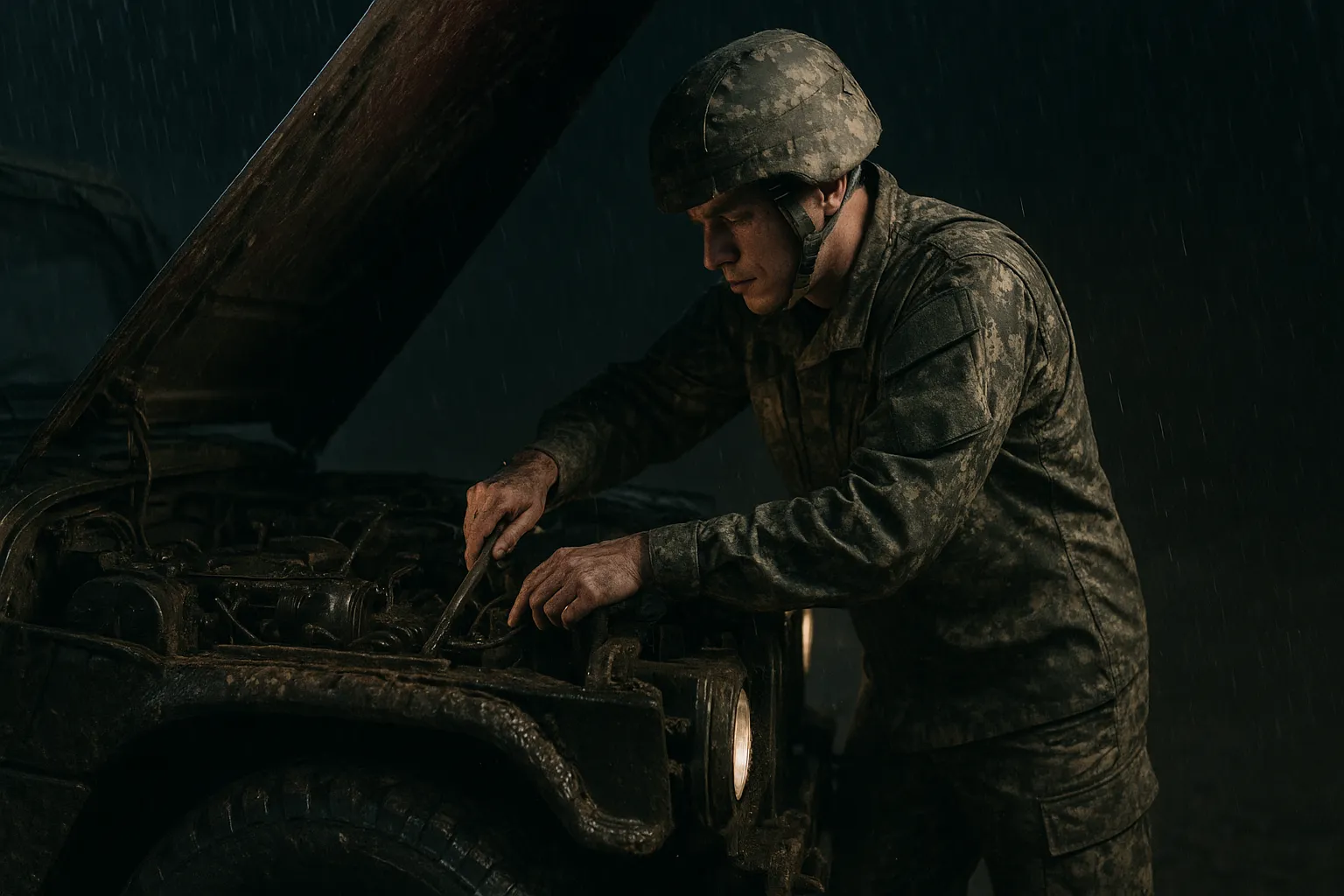
That’s a major reason combat credibility is so hard to “buy.” You can purchase parts. You can’t purchase institutional reflexes.
The PLA’s institutional risks: loyalty, corruption, and rigid control
There’s also a political-institutional layer that matters because it shapes how truth moves inside the system.
Three often-cited weaknesses:
1) Political loyalty above battlefield competence
When promotions reward loyalty, initiative becomes risky. Obedience becomes rational. That may be useful for regime security, but modern war punishes slow, rigid decision-making.
2) Corruption that distorts readiness
Corruption isn’t just “money wasted.” It can become a readiness hallucination:
- fake readiness reports
- inflated capability claims
- procurement fraud and corner-cutting
Peace allows these distortions to persist. War exposes them brutally and quickly.
3) Centralized command culture
Rigid hierarchies often mean slower adaptation. In a fast-moving conflict, especially against flexible opponents, junior leader initiative can decide outcomes. If junior leaders are trained to wait rather than act, you get paralysis at the worst time.
The uncomfortable point here isn’t that China is uniquely incompetent. It’s that its incentives can reward looking ready instead of being ready—and the longer you go without war, the easier that becomes.
Why the West “seems better” isn’t IQ. It’s iteration.
The West doesn’t have a monopoly on smart engineers. What it has—historically—is a different cycle:
- build a weapon
- use it in war
- watch it fail
- fix it
- repeat
China’s pattern (as outsiders perceive it) is closer to:
- build a weapon
- parade it
- simulate it
- assume it works
That difference compounds over decades. Not because simulations are useless—they aren’t—but because simulations don’t generate the same kind of institutional humility that comes from real failure with real consequences.
This is why people worry that China may not fully realize how weak some systems are until a serious conflict forces the issue. And if a great power discovers its own weaknesses mid-war, that’s dangerous for everyone, including its adversaries—because overconfidence plus surprise failure is how escalation happens.
India: similar constraints on paper, different behavior in real life
The immediate pushback is fair: India also has corruption, bureaucracy, and hierarchy. Yet India is widely considered militarily strong and war-capable. Why?
Because it compensates in ways that matter more than outsiders expect.
1) India has real operational experience
India has been operating under real conflict pressure repeatedly—sometimes in headline wars, often in persistent security operations. Examples that come up often include:
- Kargil War (199) — high-altitude modern warfare
- Counter-insurgency in Kashmir and the Northeast (decades)
- Balakot air strikes (2019)
- Naval operations (anti-piracy, sea lanes)
This creates a living culture of “we’ve done this for real,” not “we’ve rehearsed it.” It also produces officers and NCOs who’ve had to make decisions when plans collapse.
2) Indian hierarchy is strict—but not ideologically frozen
India is hierarchical, but it’s not typically described as a place where initiative is inherently suspicious. Junior officers are expected to lead and improvise. Argument and friction inside the system exist, and that’s not always bad in war. It can mean reality is allowed to speak upward.
Put bluntly: Indian officers can argue with seniors; Chinese officers may fear contradicting them. That single cultural difference can decide battles.
3) Corruption exists, but it’s often “upstream”
India’s corruption is frequently described as concentrated in procurement and higher-level bureaucracy—messy, slow, sometimes scandal-prone. But frontline units live closer to a harsh reality: you can’t fake readiness when your daily environment audits you.
A forward commander can’t pretend equipment works if it doesn’t. Operational pressure forces competence in a way peacetime paperwork never will.
4) Motivation and unit identity matter
Indian soldier motivation is often described as grounded in:
- regiment and unit honour
- peer respect
- identity and pride
That kind of motivation becomes decisive when communications fail, plans change, or leaders are lost. Units held together by identity can keep functioning even when the system above them is confused.
5) Diversity as adaptability
India’s forces operate across mountains, deserts, jungles, coasts, and cities—and are drawn from populations familiar with those environments. That can translate into adaptability and tolerance for hardship, which matters more than glossy equipment brochures.
6) Joint training and external exposure
India regularly trains with major militaries (the US, France, Israel, Australia, Japan), which exposes officers to modern doctrine and, crucially, to a culture of frank after-action critique. That external friction can upgrade realism.
China, by comparison, is often perceived as more insulated from outside critique—which makes self-correction harder.
The real distinction: war-readiness isn’t a budget line item
If there’s a single thread tying this together, it’s that military strength is not just “technology” or “discipline.” It’s the ability to adapt faster than reality breaks your plans. India’s experience and initiative culture make it look more war-ready than its bureaucracy suggests. China’s hardware can look impressive while still leaving observers unsure how it performs when war stops being theoretical.
Conclusion
China’s challenge isn’t that it’s incapable of advanced weapons; it’s that modern combat power depends on reliability, integration, and institutional honesty under extreme stress. India, despite its flaws, benefits from repeated real-world operational pressure and a culture that tolerates improvisation. In the end, “military experience” is less about glory and more about the brutal feedback loop that turns assumptions into competence—or exposes them as fantasy.