
Why Israel–Palestine Feels Uniquely Intense
Many conflicts are “just” land disputes, but this one carries layered national identities, sacred geography, living trauma, and a self-reinforcing security dilemma. Global attention then magnifies every event into a proxy fight over justice, belonging, and who gets to feel safe.
Posted by

Related reading
The Rentier State Behind Authoritarianism
Authoritarianism is often blamed on religion when the deeper cause is political economy. States financed by oil, foreign patrons, or illicit markets can survive without taxation—and therefore without accountability to their citizens.
Why Threats Against Judges Cluster Around Power Disputes
Judges aren’t threatened in proportion to a ruling’s moral horror, but to the losing side’s organized, identity-bound capacity to coerce. The antidote is conduct-based enforcement and post-harm incentive forensics—not category-based repression.
Stop Selling Reservation as Welfare: It’s Representation
The reservation debate stays stuck because it’s framed as compensation, poverty relief, or a temporary ladder. A representation-and-reach framing treats it instead as institutional design: building a state that serves every stakeholder it governs.
Why the Israel–Palestine Conflict Feels “Unique” (Even Though Land Disputes Aren’t)
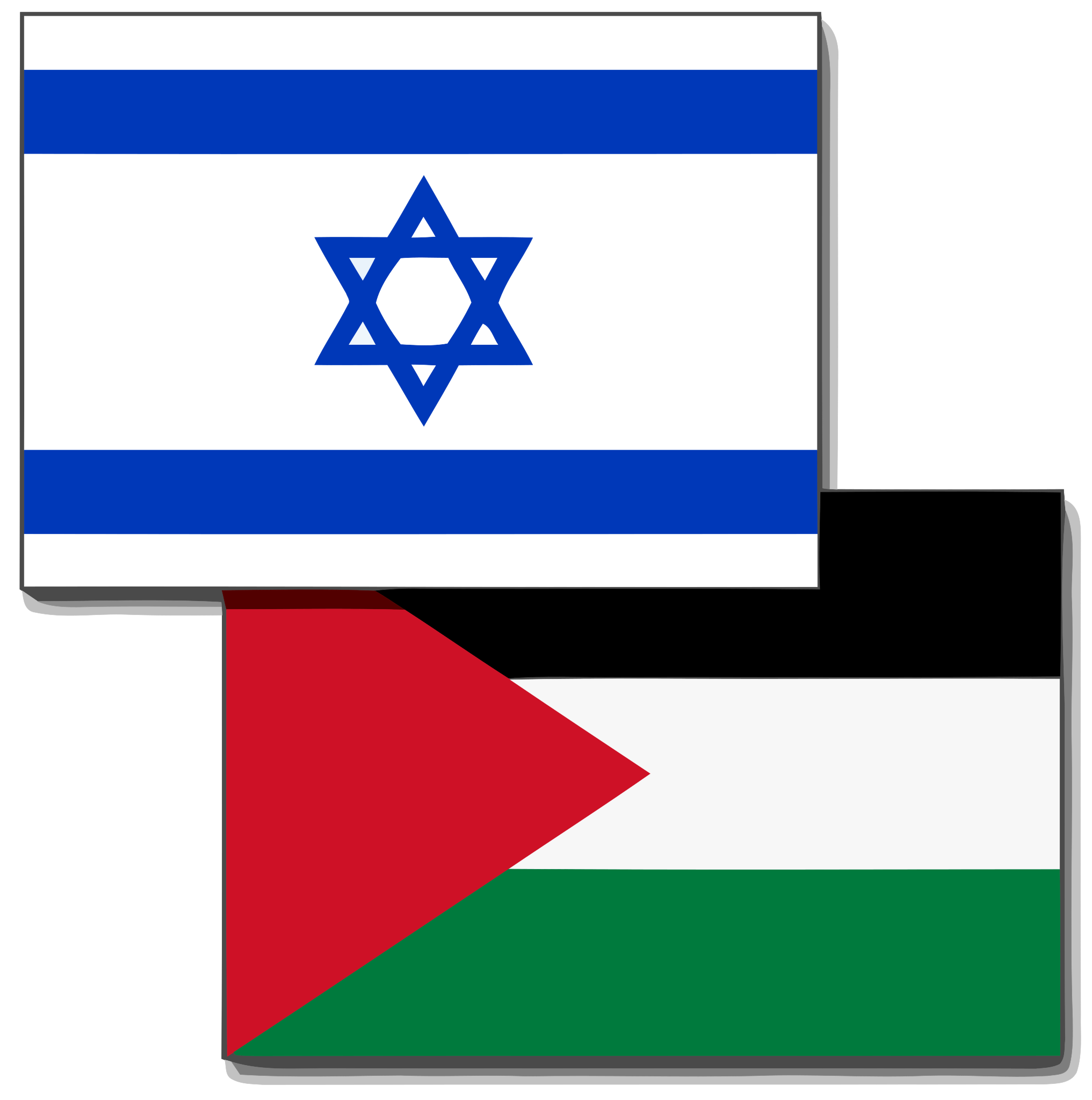 At a distance, the Israel–Palestine conflict can look like the oldest story in politics: two peoples claiming the same territory. That story is everywhere. Borders have been redrawn a thousand times. Populations have moved, mixed, been expelled, returned, or rebuilt. If it’s “just a land dispute,” why does this one feel so emotionally radioactive—like it has its own gravity?
Part of the answer is that it isn’t just a land dispute. Land is the surface. Underneath it are identity, trauma, religion, and a security dilemma that constantly feeds itself. Add to that a level of global attention that most conflicts never receive, and you get something that feels uniquely intense—even if, structurally, it shares features with other fights over territory.
It’s Not One Claim vs Another. It’s Two Full National Projects
Plenty of conflicts are territorial, but not every territorial conflict involves two modern national movements that each see the land as central to who they are.
For many Israelis, Israel is not simply a place to live. It is tied to Jewish peoplehood and a history of persecution that culminated in the Holocaust, alongside a long-standing connection—religious, cultural, historical—to the land. That creates a powerful idea: safety requires sovereignty, and sovereignty requires a state with real control.
For many Palestinians, Palestine is not simply a map. It’s home—villages, cities, family land, cemeteries, memories—and also a national identity shaped by displacement and loss. The experience of being made stateless or living under military occupation (as many Palestinians have) turns the claim into something existential. It becomes about dignity and belonging, not just acreage.
When two peoples aren’t just arguing over a border but are building their entire story of “who we are” around the same space, compromise stops feeling like negotiation and starts feeling like self-erasure.
The Land Is Also Sacred (Which Raises the Stakes)
Many places have holy sites; few have ones that sit at the center of multiple living religions with global communities watching. Jerusalem especially is not just symbolic—it’s sacred, and sacred things don’t bargain easily.
When land is sacred, political arguments mutate into moral ones:
- If it’s holy, giving it up can feel like betrayal.
- If it’s promised, sharing it can feel like theft.
- If it’s a site of worship and history, control can feel like survival.
Religious attachment isn’t the only driver—far from it—but it’s a multiplier. It raises the emotional temperature and makes pragmatic arrangements harder to sell to a public that’s already suspicious and grieving.
Trauma Isn’t Background Noise Here. It’s the Language People Speak
A lot of conflicts include historical wounds. In this one, those wounds are not distant—they are actively maintained in collective memory and often reinforced by present-day experiences.
Israeli Jewish trauma isn’t abstract: it includes centuries of antisemitism, expulsions, pogroms, and the Holocaust. That history can produce a constant fear that weakness invites annihilation and that “never again” must be enforced, not hoped for.
Palestinian trauma isn’t abstract either: it includes displacement, living as refugees or under occupation, restrictions, violence, and repeated cycles of war that erase normal life. That history can produce a constant fear that time is being used against them—that the world will accept permanent dispossession if they stop resisting.
The result is two societies carrying different, real, painful narratives that don’t just conflict; they often invalidate each other. And when people feel their pain is denied, they tend to harden, not soften.
It’s a Security Dilemma With No Trust and Lots of Proof
There’s a grim logic that shows up in many conflicts: each side believes it’s acting defensively, and those defensive actions look like aggression to the other side.
- Israelis see attacks and threats and conclude they need stronger security control, deterrence, and intelligence dominance.
- Palestinians experience that security control as domination, humiliation, and confinement—and conclude they must resist because otherwise nothing changes.
Once that cycle becomes normal, every new measure has a built-in interpretation:
- “We need this to protect our people.”
- “They’re doing this to control/wipe us out.”
Even when leaders talk about peace, people remember the last broken promise, the last bomb, the last raid, the last rocket, the last funeral. Trust isn’t just low; it’s structurally punished. Any politician who takes a risk for compromise can be accused of endangering their own side.
“Wipe Each Other Out” Isn’t One Desire—But Extremists Get Oxygen
It’s tempting to describe the conflict as two populations that want to eliminate each other. That’s not accurate as a blanket statement. Many people on both sides want some form of normal life—rights, safety, freedom, stability, a future for their kids. But the conflict creates an environment where extremist fantasies can thrive, because fear makes simple, brutal answers feel appealing.
Extremists benefit from a few dynamics:
- Dehumanization: When you only encounter the other side as a threat, empathy becomes a liability.
- Collective punishment thinking: People start blaming a whole population for the actions of militants or the state.
- Moral permission through suffering: “After what we’ve endured, anything we do is justified.”
And because the conflict is so visible, extremists can also raise money, recruit, and gain influence by framing themselves as the only ones who “tell the truth” or “fight back.”
Power Asymmetry Warps Everything
Many conflicts have uneven power, but here the imbalance shapes not only battlefield realities but also the politics of negotiation.
When one side is stronger in conventional military and state capacity, it can prioritize security and control. When the other side lacks a state and consistent leverage, it may see international pressure, mass politics, or armed struggle as its only tools. That doesn’t excuse violence; it explains why the incentives don’t line up neatly around compromise.
Asymmetry also creates a moral fog:
- The stronger side may be judged by a higher standard and feel unfairly singled out.
- The weaker side may be romanticized as purely righteous and have its own abuses minimized.
Either way, the conflict becomes not just a dispute but a global argument over what justice even looks like when power isn’t equal.
The World Is Personally Invested (For Better and Worse)
This is one of the most internationally “owned” conflicts in modern history. Global powers have been involved for generations. Diaspora communities care deeply. Religious communities care deeply. Media ecosystems care deeply. Activist movements care deeply.
That attention can be useful—pressure can deter abuses, diplomacy can open doors, aid can keep people alive. But it also turns the conflict into a proxy for other fights:
- colonialism vs anti-colonialism
- terrorism vs resistance
- nationalism vs human rights universalism
- East vs West narratives
- religious civilizational stories
So a local tragedy becomes a global identity battle. People aren’t just arguing about what happened in a particular town on a particular day; they’re arguing about what kind of world they want to live in, and who gets to be considered fully human in it.
Why This Conflict Feels So Stuck
Many land disputes end when exhaustion outweighs ideology, when borders stabilize, or when one side decisively wins. This one resists those endings because the core questions are still alive:
- Who belongs?
- Who is safe?
- Who has rights?
- Who controls borders and movement?
- What happens to refugees and their descendants?
- What happens to settlements and the land they sit on?
- What happens to Jerusalem and holy sites?
- What counts as justice—and who gets to define it?
Those questions aren’t technical. They’re existential. And existential questions don’t negotiate like zoning laws.
Conclusion
Israel–Palestine feels unique because it’s a land dispute carrying the weight of sacred geography, competing national identities, living trauma, and a security logic that constantly reproduces itself. It’s also uniquely globalized—constantly interpreted, weaponized, and amplified by people far from the ground. None of that makes it hopeless, but it does explain why it produces such fierce certainty and such deep fear on all sides.