
Winter Cooking and the Practice of Attention
Winter cooking is less about quick meals and more about staying present with slow change—reduction, braising, fermentation. It turns patience into a practical skill: noticing, returning, and letting depth arrive on its own timeline.
Posted by

Winter cooking as a kind of devotion
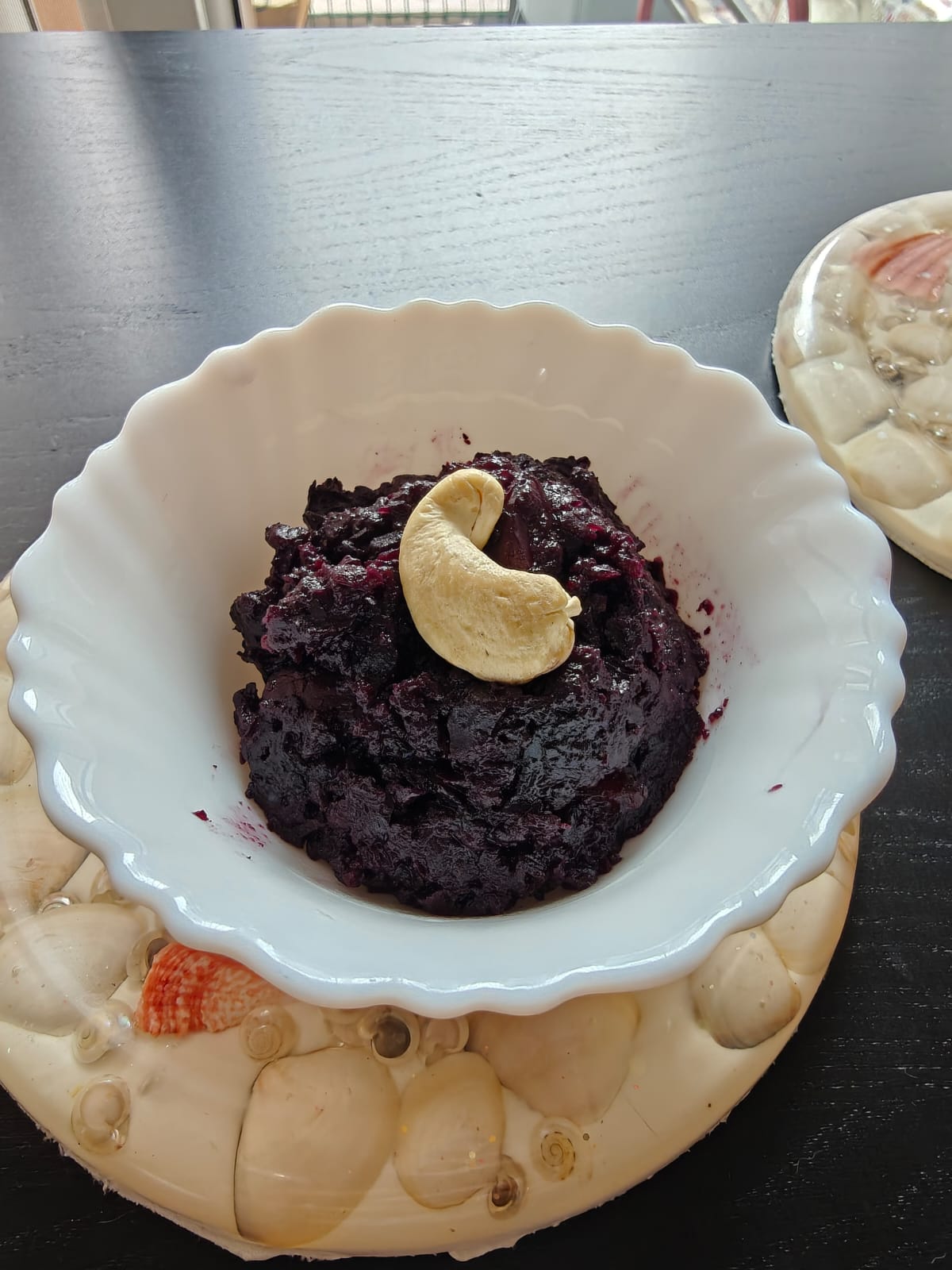 kali gajar halwa - the ultimate winter dish
Winter cooking feels less like “making dinner” and more like entering into a small, stubborn relationship with time. It asks for attention in a way summer rarely does. In warmer months you can assemble brightness—salads, quick sautés, something you can make and eat while still wearing the day. Winter, though, is the season of standing near the stove and watching ingredients become themselves.
I keep thinking about that phrase: watching ingredients lose their extra. Watching them boil down, literally and emotionally, toward their essence.
Two and a half hours can pass with nothing “happening” in the flashy sense—no dramatic flips, no big reveal—just the slow, steady work of water leaving, sugars deepening, textures surrendering. It’s not instant gratification; it’s gradual transformation. You don’t get to pretend it isn’t happening. You’re there for it, or you miss it.
Boiling down to the essence
Reduction is such a plain technique that it’s easy to underestimate how philosophical it is. You start with something abundant—liquid, volume, looseness—and end with something concentrated. But the process is mostly waiting and watching:
- listening for the change in sound as a simmer shifts toward a thicker burble
- noticing when a raw edge turns round
- catching that moment before it goes too far, because “essence” can become “burnt” faster than we like to admit
Winter cooking loves this territory: long simmers, slow braises, gravies that need time to become coherent. There’s a reason the phrase “low and slow” feels like a winter mantra. The stove becomes not just a heat source but a metronome. It sets a pace that’s hard to argue with.
And what’s interesting is that the labor isn’t always physical. A lot of it is mental. You can chop, stir, skim, taste. But you can’t force the timeline. You can’t “productivity hack” a pot into depth. Time is the ingredient you can’t substitute.
Koraishuti kochuri and the sweetness you can’t rush
Even something like koraishuti kochuri—something that people might think of as festive, even indulgent—carries this winter logic. The peas have to be coaxed into that slightly sweet place, and the whole thing depends on paying attention to texture, moisture, balance. It’s not just “stuff peas into dough and fry.” It’s the careful middle: when the filling is flavorful but not wet, when it’s soft but not pasty, when it tastes like peas and also like the spices have actually had time to belong there.
There’s something instructive about that “slightly sweet place.” You can’t bully peas into sweetness; you can only handle them in ways that allow it to come forward. And once you’ve tasted it, you know when it’s missing. Winter cooking is full of these quiet targets—outcomes you can’t measure with a timer alone. It trains your senses in small increments.
It also makes you confront how much of good food depends on restraint. You stop when it’s ready, not when you’re tired of the task. You cook until the rawness is gone, not until you’ve reached the end of your attention span.
Why is winter cooking so labor-intensive?
Part of the logic is obvious: winter invites techniques that create warmth and sustenance—foods that hold heat, foods that satisfy, foods that feel like they line the body. Those techniques often require time. But that’s not the whole story. Winter cooking is labor-intensive because winter itself is a season that doesn’t let you pretend time isn’t real.
In summer, there’s an illusion of endlessness. Days stretch. Meals can be light. The world is generous with quick pleasure. In winter, the margins shrink. The air turns sharp. Darkness comes early. The body asks for steadiness. The kitchen starts to resemble a small refuge, and refuge takes work.
Also: the cold changes what “good” tastes like. Brightness alone can feel thin. You want depth. You want food that has been through something and come out richer. Depth often requires the slow merging of flavors, the patience of heat doing its quiet work, the willingness to stay nearby.
Winter cooking is labor-intensive because it’s a response to winter’s blunt honesty. The season says: slow down, prepare, pay attention, don’t waste heat, don’t waste effort, don’t waste food. Make something that lasts.
Fermentation: the lesson of ongoingness
Fermentation takes that winter logic and turns it into a kind of meditation—except it’s a meditation you can’t fully detach from. Ferments sit there and live their own lives. You can’t just “log in, log out” and expect them to behave.
A part of your mind stays with the jar.
Even when you’re not actively doing anything, you’re tracking it. You’re wondering what’s happening at this hour, at this temperature, in this light. You’re interpreting small signs. You’re checking for aroma shifts, subtle pressure, that point where something feels alive in the good way rather than alive in the ominous way.
And the most unsettling (and beautiful) part: even when they’re “done,” they’re not done. You can slow fermentation down. You can try to arrest it. But you don’t get absolute control. You don’t get a clean ending. You get a relationship with a process that continues, just at a different pace.
There’s something deeply winter about that. Winter looks still from the outside, but nothing is truly inert. Things are just moving differently. Fermentation makes that visible. It teaches you that time doesn’t stop just because you’ve put something away.
Observation as a skill (and a way of being)
What winter cooking teaches, more than any single recipe, is observation. Not the kind that’s loud or performative, but the quiet kind where you train yourself to notice:
- when something is changing before it becomes obvious
- when “almost there” is actually the whole craft
- when you’re tempted to rush because you’re bored, not because the food is ready
This is why winter cooking can feel like a labor of love. Love, in practice, is often attention given consistently. Not attention given once. Not attention given only when it’s fun. The pot on the stove doesn’t care how inspired you feel. It responds to what you actually do—and to the time you allow.
Fermentation sharpens this even further. It forces humility. You can do everything right and still get surprises. You can do something slightly off and still get something delicious. The outcome is not always a clean reward for effort. It’s feedback. It’s learning. It’s the reminder that skill is built over repeated encounters with uncertainty.
What this teaches about life (without getting too neat about it)
It’s tempting to turn winter cooking into a tidy metaphor: patience, virtue, resilience. But what feels more accurate is this: winter cooking doesn’t romanticize patience. It makes patience practical. It makes patience a tool.
You don’t wait because waiting is holy. You wait because waiting is how flavors develop, how textures soften, how the harshness dissolves, how the thing becomes what it’s supposed to be.
And because you can’t step away entirely, you learn a particular kind of presence. Not constant hovering, but a steady returning. You check in. You adjust. You accept that “done” is sometimes a moving target. You accept that your timeline is not the only timeline in the room.
Maybe that’s the real lesson: not that slow is better, but that some forms of goodness only arrive slowly—and they ask you to be the kind of person who can stay with a process long enough to recognize it.
Conclusion
Winter cooking is intensive because it’s made of processes that can’t be rushed without losing what you came for: depth, warmth, coherence. Reduction and fermentation both train the same muscle—attention over time, with outcomes that aren’t fully under your control. It’s labor, yes, but it’s also a way of practicing presence. And after a while, you start to recognize the quiet satisfaction of food that has been allowed to become itself.