
Curiosity First vs Skepticism First: How Cultures Listen
Some rooms offer speakers trust and runway; others make you earn attention immediately. These two “listener defaults” shape what gets rewarded, what gets mocked, and why the same sentence can land as insight or as hype.
Posted by

Related reading
MCU Thor and Norse Myth: Shared Names, Different Logic
Marvel’s Thor borrows real Norse names and symbols, but swaps the myth’s tone, family ties, and fatalistic cosmology for superhero storytelling. That same “remix” approach is rarer with Indian mythology because it’s a living, devotional tradition with higher cultural and political stakes.
The Odyssey Casting Debate Is a Trust Crisis
The loudest reactions to The Odyssey’s casting aren’t really about diversity or mythic reinterpretation—they’re about audience trust. When studios deny obvious signaling and moralize disagreement, even defensible artistic choices start to read like propaganda.
Abundance Doesn’t Calm Factions It Supercharges Them
Fallout’s pre-war world suggests prosperity doesn’t automatically reduce extremism—it expands what powerful, insulated factions are capable of attempting. When high capability meets low trust and concentrated power, “total solutions” start to look rational.
Curiosity-first vs skepticism-first: a theory of how people listen
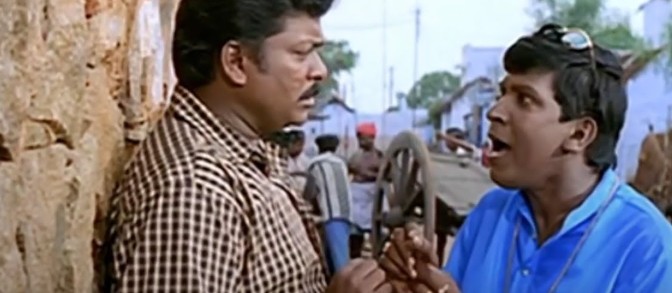 I keep coming back to an idea that feels obvious the moment you notice it, but strangely hard to prove in any formal way: people don’t just speak differently across cultures—they listen differently.
And those listening defaults change everything: what kind of speech survives, what gets mocked, what gets rewarded, what gets ignored, and what gets challenged.
The rough model I’ve been using is this:
- Curiosity-first listening: “This might be interesting. Let it unfold.”
- Skepticism-first listening: “This might be bullshit. Filter first.”
It’s tempting to say “some languages are curiosity-first and others are bullshit-first,” but that’s not quite right. The language isn’t a moral force. The listener posture is culturally trained, and the language ends up encoding that posture through tone, economy, irony, and what kinds of elaboration are socially acceptable.
This whole thing started (for me) from noticing something about Tamil: it has a strong tendency to deflate the obvious and puncture the grandiose. Not always, not everywhere, not for every speaker—but as a conversational reflex, it’s hard to unsee.
Two listener postures
1) Curiosity-first listening
In curiosity-first contexts, the listener’s default move is to grant the speaker some runway.
- The speaker is allowed to set the frame.
- Big claims get time to breathe.
- Questions often come after some acceptance.
- Verbosity is tolerated. Sometimes it’s even rewarded.
Failure mode: bullshit inflation. The confident talker can coast longer than they should.
2) Skepticism-first listening
In skepticism-first contexts, the listener’s default move is to protect attention.
- Grand statements trigger suspicion.
- Vague abstraction gets challenged quickly.
- Questions come early, often as a way of forcing specificity.
- Compression and understatement get social respect.
Failure mode: under-expression. People can become so allergic to fluff that they lose patience for nuance, emotion, or slow-building thought.
This is not about being “smart” vs “dumb.” It’s about what gets penalized in everyday conversation.
The same sentence, two worlds
Here’s a quick test sentence that exposes the difference immediately:
“This idea could change how people think.”
A curiosity-first listener tends to respond like:
- “Oh? How?”
- “Interesting—tell me more.”
- “Go on.”
A skepticism-first listener tends to respond like:
- “How exactly?”
- “Meaning?”
- “Okay, but what’s the mechanism?”
Both are asking “how,” but the emotional posture is different. One is granting intrigue first. The other is subtracting hype first.

In Tamil contexts, that skepticism often comes with a deflating tone—something like seri seri, sollu… epdi? (“yeah yeah, say it… how?”). The curiosity isn’t absent. It’s just gated behind a filter.
Where different cultures seem to land (anecdotal, but consistent)
This isn’t a statistical claim. It’s a pattern-based map—more useful as a way to predict conversational friction than as a rigid taxonomy.
A spectrum of listener defaults
| Culture / Language | Listener default | What gets rewarded |
|---|---|---|
| Tamil | Strongly skepticism-first | Understatement, restraint, mechanism, “don’t waste my time” clarity |
| Malayalam | Strongly skepticism-first | Sharp irony, quick bullshit detection, argumentative precision |
| Kannada (older/rural/literary) | Skepticism-first | Earthy bluntness, doing > explaining, low patience for flourish |
| Marathi | Skepticism-first (soft) | Dry wit, practicality, skepticism toward abstraction but patience toward people |
| Bengali | Hybrid (“judging curiosity”) | Long conversation allowed, pretension punished brutally |
| Kannada (urban/Bangalore) | Contextual hybrid | Practical skepticism + cosmopolitan patience (utility matters) |
| Telugu | Contextual | Deference/status changes the filter; eloquence admired if backed by competence |
| Gujarati | Curiosity-first | Expansive talk tolerated, optimism/confidence rewarded, pragmatic filtering |
| Punjabi | Strongly curiosity-first (socially) | Energy, presence, swagger; skepticism often delayed and indirect |
Even within one language, there are splits: urban vs rural, elite vs non-elite, bureaucratic vs artistic, internet vs family living room. But the spectrum still holds surprisingly well as a first approximation.
What skepticism-first sounds like in the wild
Skepticism-first cultures don’t just “disagree more.” They have a different relationship with grandness.
A grand claim, delivered cleanly, can invite mockery—not because the idea is wrong, but because the posture is suspicious. If you sound too sure of your own profundity, you’re treated like you’re selling something.
This shows up in three recurring behaviors:
- Early interruption for clarity: “Meaning?” “Exact-a enna?” “Which system?”
- Deflation of obviousness: if you say something everyone knows with a philosopher voice, you get punctured.
- Authority via restraint: talking less (but precisely) often signals credibility.
Tamil and Malayalam are the clearest examples in this model. Malayalam can have a sharper “intellectual snark” edge; Tamil can feel more stoic and dry. Kannada (in older or more rural registers) often shares the blunt “get to the point” instinct, though with less irony.
Marathi is an interesting middle: skepticism-first about ideas and grand theories, but more patience with personal narrative. The filter is real, but it’s softer—more “dry amused realism” than a slapdown.
What curiosity-first sounds like in the wild
Curiosity-first cultures allow performance to exist without immediate punishment. That doesn’t mean they’re naive; it means they tolerate a longer runway before demanding proof.
You see patterns like:
- Listener patience with framing: “Okay, set it up. Explain.”
- Confidence mistaken for substance (sometimes): fluency gets social credit.
- Exaggeration treated as normal rhetoric: not automatically a lie, more like a style.
Punjabi in social settings is a strong example: big talk can be part of the culture’s texture. Calling bullshit too early can make you look like a killjoy. Gujarati often leans curiosity-first too—expansive talk isn’t automatically penalized, and filtering can be more pragmatic (“will this work?”) than rhetorical (“is this inflated nonsense?”).
Telugu feels more situational: everyday talk can be mildly skeptical, but status contexts can flip it into curiosity-first deference. Eloquence can be admired, but empty verbosity still doesn’t get infinite runway.
Bengali is its own beast: intellectually curious enough to let long conversations happen, but socially equipped with a brutal anti-pretension knife. It can feel like: I’m listening… and judging the whole time.
Three everyday scenarios where the difference becomes obvious
1) The office meeting
Someone says: “We need a paradigm shift.”
- In curiosity-first rooms: nods, then “can you expand?”
- In skepticism-first rooms: smirk, interruption, or silent disengagement until you cash out the phrase into specifics.
The phrase “paradigm shift” is a perfect bullshit test because it can mean something real—or nothing at all.
2) The family conversation
You say: “I’ve been thinking deeply about life direction.”
- Curiosity-first response: “Okay, tell me.”
- Skepticism-first response: “What’s the problem? Say it directly.”
Reflection without a concrete problem statement can be read as indulgence.
3) Casual humor
Say something obvious in a grand voice: “Ultimately, life is about balance.”
- Skepticism-first humor punctures you immediately (the “Newton’s cousin” type of response).
- Curiosity-first humor might accept it playfully: “Full gyaan mode!” without treating it as a crime.
That difference in comedic instinct is not trivial—it reveals what the culture is defending itself against.
Why this matters (especially if you hate fluff)
If you’re someone who values compression, mechanism, and signal—curiosity-first environments can feel bloated. People talk like they’re auditioning for credibility. Frames expand. Explanations multiply. The listener tolerates it because the social norm says: let the speaker build the castle.
If you’re someone who values emotional expressiveness, slow thought, and exploratory speech—skepticism-first environments can feel harsh. People force you to justify the right to speak before you’ve even found the shape of what you’re trying to say.
Neither posture is morally superior. They’re defensive adaptations. One protects against wasted time and performative nonsense. The other protects against premature dismissal and social hostility.
A small experiment that reliably works
Try this line with different people:
“I’ve been thinking a lot about systems lately.”
Watch the first two seconds.
- If you get: “Oh nice—what kind?” that’s curiosity-first.
- If you get: “Which system?” that’s skepticism-first.
- If you get an eyebrow before a question, that’s skepticism-first in its purest form.
The micro-reaction tells you what the listener thinks your sentence probably is: signal, or noise.
Conclusion
Curiosity-first vs skepticism-first isn’t a rigid classification of languages; it’s a map of listener reflexes that cultures train into people. Once you start noticing it, you can predict where grand statements will be rewarded, where they’ll be punctured, and why certain styles of speech feel “honest” or “fake” depending on who’s listening. The most useful part of the model isn’t labeling cultures—it’s adjusting your own speech so your signal survives the listener’s default filter.