
Rocket Singh and the Market for Management Styles
Rewatching Rocket Singh years later turns a simple “good guys win” story into a clearer systems lesson: ethics and outcomes depend on incentives and market niches. The movie didn’t change—your ability to name the dynamics did.
Posted by

Related reading
MCU Thor and Norse Myth: Shared Names, Different Logic
Marvel’s Thor borrows real Norse names and symbols, but swaps the myth’s tone, family ties, and fatalistic cosmology for superhero storytelling. That same “remix” approach is rarer with Indian mythology because it’s a living, devotional tradition with higher cultural and political stakes.
The Odyssey Casting Debate Is a Trust Crisis
The loudest reactions to The Odyssey’s casting aren’t really about diversity or mythic reinterpretation—they’re about audience trust. When studios deny obvious signaling and moralize disagreement, even defensible artistic choices start to read like propaganda.
Abundance Doesn’t Calm Factions It Supercharges Them
Fallout’s pre-war world suggests prosperity doesn’t automatically reduce extremism—it expands what powerful, insulated factions are capable of attempting. When high capability meets low trust and concentrated power, “total solutions” start to look rational.
Rewatching Rocket Singh After 13 Years: The Movie Didn’t Get Deeper — I Did
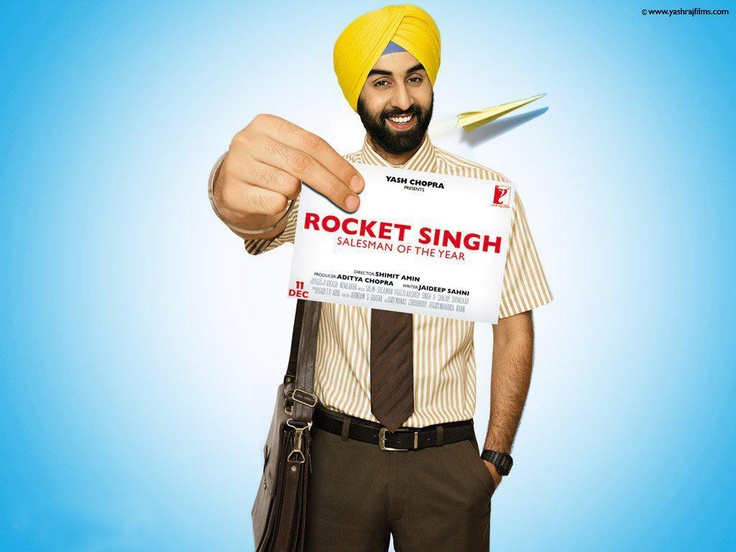 I watched Rocket Singh: Salesman of the Year a second time after 13 years.
The first time, I walked away with the clean, comforting moral the film practically hands you: good guys win. It’s the kind of lesson that lands well when you’re younger, still hungry for a world that rewards decency in a straightforward way. The honest kid gets bullied, keeps his soul intact, and triumphs. Roll credits.
The second time, I saw a different story hiding in plain sight. Not “good guys win,” but something colder and more useful:
Every management style has a market niche.
It’s not that the first reading was wrong. It’s that it was incomplete. And the gap between those readings says less about the film and more about what happens to your brain after you’ve lived inside a few organizations, watched incentives eat values, and realized that “ethics” and “outcomes” don’t map onto each other as neatly as movies like to pretend.
The Surface Moral: A Bollywood-Friendly Fairness Fantasy
The “good guys win” reading works because it’s how most commercial storytelling is structured.
You get a clear villain-management archetype: loud, extractive, margin-obsessed, allergic to humility. You get a clear hero-management archetype: principled, transparent, loyal to customers and teammates. You get a moral contrast so obvious it could be printed on the poster.
This is the version of the story that feels like justice. You can almost hear the audience internally nodding: See? Integrity pays.
But if you’ve spent any time in real workplaces, you know the messier truth: integrity doesn’t always pay. Sometimes it pays. Sometimes it gets you sidelined. Sometimes it’s exploited. Sometimes it’s used as branding. Sometimes it’s a luxury you can afford only after you’ve already won.
So when the film makes integrity win, it’s not describing the world. It’s selling a world we want to be true.
That’s not an insult. It’s what mainstream cinema does. It compresses life into something emotionally legible.
The Second Moral: Not Good vs Evil — Different Optimizations
On rewatch, the more interesting lens isn’t morality; it’s systems.
Rocket’s approach doesn’t win because the universe rewards virtue. It wins because a specific market condition makes his style valuable at that moment.
There’s a niche where:
- customers are tired of being lied to,
- incumbents have become arrogant and bloated,
- trust is scarce and therefore valuable,
- and reputation starts mattering more than brute speed.
In that niche, transparency is not just a virtue. It’s a competitive strategy.
Change the niche and the math changes. Put Rocket in a market that is hyper price-sensitive, where buyers expect corners to be cut and treat vendors as disposable. In that environment, his model might lose badly. Not because he’s wrong, but because the environment rewards different traits.
This is the uncomfortable adult reading: the film’s “ethical startup” is context-dependent.
The “Villain” Boss Isn’t Confused — He’s Playing a Different Game
The older I get, the harder it becomes to watch these stories and fully buy the villain edit.
The boss’s management style is ugly, yes. But it’s not irrational. It’s optimized for a certain game:
- maximize margins,
- assume churn,
- treat sales as conquest rather than relationship,
- extract value quickly before anyone can hold you accountable.
That model scales. It attracts aggressive talent. It works in commodity markets. It thrives in environments where reputation damage is slow and revenue is fast.
People like to pretend bad management is always incompetent. It’s often the opposite: it’s extremely competent at achieving the wrong objective.
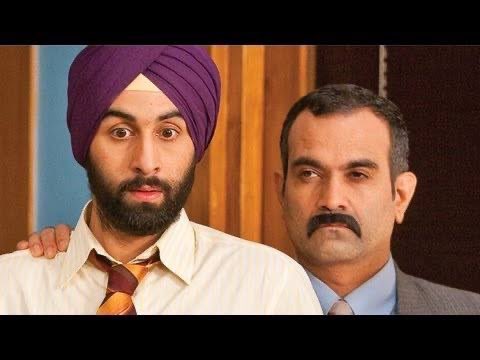 What the movie quietly admits—without saying it out loud—is that the system Rocket rebels against is efficient. It’s confident. It knows what it’s doing. It just collapses once reputation becomes a bottleneck instead of a footnote.
Rocket Isn’t Anti-Profit. He’s Anti-Misalignment.
There’s also a lazy reading where Rocket becomes some anti-capitalist moral hero, rejecting the ugliness of “business” to do things the right way.
That’s not what’s happening.
Rocket doesn’t reject profit; he rejects misaligned incentives:
- salespeople rewarded for closing regardless of delivery,
- delivery teams forced to clean up lies they didn’t tell,
- customers paying hidden costs later,
- internal politics replacing customer outcomes.
His “ethics” aren’t just ethics. They’re systems design.
He’s basically saying: if you want a sustainable organization, you can’t build it on a structure that rewards people for creating future problems. You can get growth that way, but it comes with a debt schedule. Eventually the bill arrives—through churn, reputation, internal burnout, or all three.
That’s why the second reading hits differently. It’s not about good hearts. It’s about good incentives.
Why Movies Feel Deeper Later: They Don’t Change — Your Labels Do
At first, it’s tempting to credit writers with some kind of layered genius. Like they intentionally built a “Level 1 for teens, Level 2 for adults, Level 3 for burnt-out managers” structure into the script.
Sometimes that’s true. But I’m increasingly convinced of something more interesting:
Those levels are already baked into normal human interaction, and stories inherit them almost automatically.
Humans don’t need formal theory to observe patterns. We navigate them socially long before we name them academically. Workplaces have power dynamics whether or not you’ve read a management book. Families have incentive structures whether or not you’ve studied game theory. People exploit loopholes whether or not anyone calls them loopholes.
So when a film portrays human situations with even moderate fidelity, it naturally contains multiple readings.
Not because the writer planted Easter eggs. Because reality itself is layered.
The Autism/ADHD Example: The Map Arrives After the Territory
This same phenomenon shows up in how older movies (or older characters) sometimes feel “accidentally neurodivergent” on rewatch.
Writers depict someone who:
- doesn’t read rooms,
- hyperfocuses,
- misses social cues,
- fixates intensely,
- struggles with executive function,
- or behaves in ways that feel “off” to everyone around them.
They might not be writing “an autistic character” or “an ADHD character” as a deliberate, researched choice. They’re just describing a type of person they’ve encountered or noticed—often without understanding it as a category.
The diagnostic labels arrive later.
That’s why these characters can feel newly legible to modern audiences. It isn’t that the character changed. The viewer gained a compression tool.
Labels like “autism” and “ADHD” aren’t magic discoveries that create new behavior. They’re naming systems. They take recurring clusters of traits and give them shorthand.
The territory existed first. The map came later.
And once you have the map, you can’t unsee the structure.
Stories Age Well When They Observe Reality, Not Morality
This is also a good test for whether a film will age like wine or like a motivational poster.
If a story only works on one moral frequency—if it needs you to agree with its declared lesson—it tends to flatten over time. Once you outgrow the lesson, the film becomes preachy or simplistic.
But if a story is built on observed reality—messy workplaces, contradictory people, incentives that distort behavior—it becomes rewatchable. You can interpret it through different lenses as you accumulate experiences and concepts.
Cinema has a particular advantage here: it can show contradictions without resolving them. A character can be competent and rotten. A hero can be ethical and fragile. Both can be true in the same frame. No footnotes required.
That’s why rewatching after a decade can feel like rereading your own journal: the content is identical, but you’re a different interpreter.
The Part the Movie Doesn’t Show (And Maybe Doesn’t Want To)
There’s an even more uncomfortable angle that creeps in if you keep pushing the systems lens.
Rocket’s model works partly because it relies on a small, values-aligned team. That kind of culture is easy to protect at five people. Harder at fifty. Brutal at five hundred.
Scale has gravity. It pulls you toward process, hierarchy, and incentives that are easier to measure than “trust.” It doesn’t mean you become evil, but it does mean you become constrained. The very thing that made you special becomes the thing you struggle to preserve.
The film ends before that problem arrives, because it’s not a tragedy. But the question lingers: if Rocket wins, what does winning turn him into?
Conclusion
Rewatching Rocket Singh after 13 years didn’t reveal a hidden moral so much as it revealed the one I wasn’t equipped to see the first time. The movie is less a sermon about virtue and more a case study in incentives, niches, and organizational tradeoffs. The best stories don’t become profound because they’re genius; they become profound because they’re honest enough to survive different versions of you.