
The AI Slop Panic Is Really About Scale and Status
The backlash against “AI slop” is less about artistic principle and more about platforms failing at discovery under infinite content supply. Underneath that is a deeper anxiety: when polish and volume get cheap, effort stops feeling like a reliable path to dignity.
Posted by

Related reading
When Voice Cloning Becomes Accent Caricature
AI voice cloning can preserve a speaker’s timbre while replacing their pronunciation and cadence with a demographic stereotype. Treating Indian English as a single preset turns personalization into systematic misrepresentation.
Cameras and microphones capture well-defined physical signals, while smell and taste emerge from complex chemical patterns. Electronic noses and tongues exist, but their sensors and AI remain specialized rather than universal.
AI Product Demos Need UI Understanding, Not Just Editing
Most “AI demo” tools are just smarter screen recorders working on pixels. The real leap is treating the interface like a scene—auto-directing zooms, pacing, and highlights based on what the UI elements mean.
The AI “Slop” Panic Is a Symptom, Not the Disease

Image credit: Wikimedia Commons

Lately it feels like every platform is trying to look tough on AI.
Bandcamp banning AI. YouTube talking about not promoting “AI slop.” A general vibe that anything AI-touched is automatically suspicious, unethical, or low-effort. The mood is punitive: as if creativity has to be “painful” to count.
I don’t like this negativity—not because AI is perfect, but because the backlash is aiming at the wrong target. It’s treating AI as the moral failure, when the real failure is much older: platforms don’t know how to manage scale, and society doesn’t know how to talk about taste without pretending it’s merit.
“AI Slop” Is Still Human Work (Just Not the Kind People Want to Respect)
One thing that gets erased in these debates is that “AI slop” doesn’t appear out of thin air. A human still decides:
- what to generate
- what to keep
- what to discard
- how to sequence it
- how to package it
- what identity to attach to it
Prompting can be lazy, sure. But so can writing a bland blog post, producing a generic pop track, or filming another dead-eyed reaction video. We never banned humans for producing low-effort content. We just called it “content.”
A lot of the anger comes from a romantic idea of authorship: if it didn’t cost you sweat, it doesn’t count. But we’ve accepted machine leverage in art for a long time—cameras, synths, samplers, Photoshop, spellcheck. The tool isn’t the category break. The scale is.
AI is a leverage multiplier. That’s what people are actually reacting to.
Platforms Aren’t Defending Art. They’re Defending Their Discovery Systems.
When YouTube says it’s going to stop promoting “AI slop,” I don’t hear an artistic principle. I hear a platform scared of being drowned.
Most feeds and recommendation systems were built for a world where producing content had friction. Even “content farms” had limits: time, money, human attention, scheduling. AI smashes that. One person can produce 10 to 10,000 times more output than before. Upload volume stops being a sign of anything except access to automation.
From a platform perspective, this is what happens:
- Feeds get flooded
- Signal-to-noise collapses
- Search results become polluted with near-duplicates
- Users start complaining that everything feels fake or templated
- Trust in curation erodes
So the platform reaches for a blunt instrument: ban it, label it, downrank it. Then wrap it in moral language so it doesn’t sound like a purely operational panic.
That’s why the “AI slop” framing is so convenient. It shifts responsibility from curation failure to creator sin.
Why Banning AI Is a Bad Competitive Move
There’s also a simple strategic issue: platforms that ban or suppress new expressive tech tend to get outcompeted by platforms that don’t.
Not because the new tech is inherently good, but because creative people go where they can experiment without being treated like criminals. If Bandcamp draws a hard line against AI-assisted music, someone else will gladly host the weird hybrid stuff: procedural genres, rapid iteration albums, niche micro-scenes built on new workflows.
Same with YouTube. If suppression is heavy-handed, creators will adapt around it or shift to places where the novelty isn’t punished.

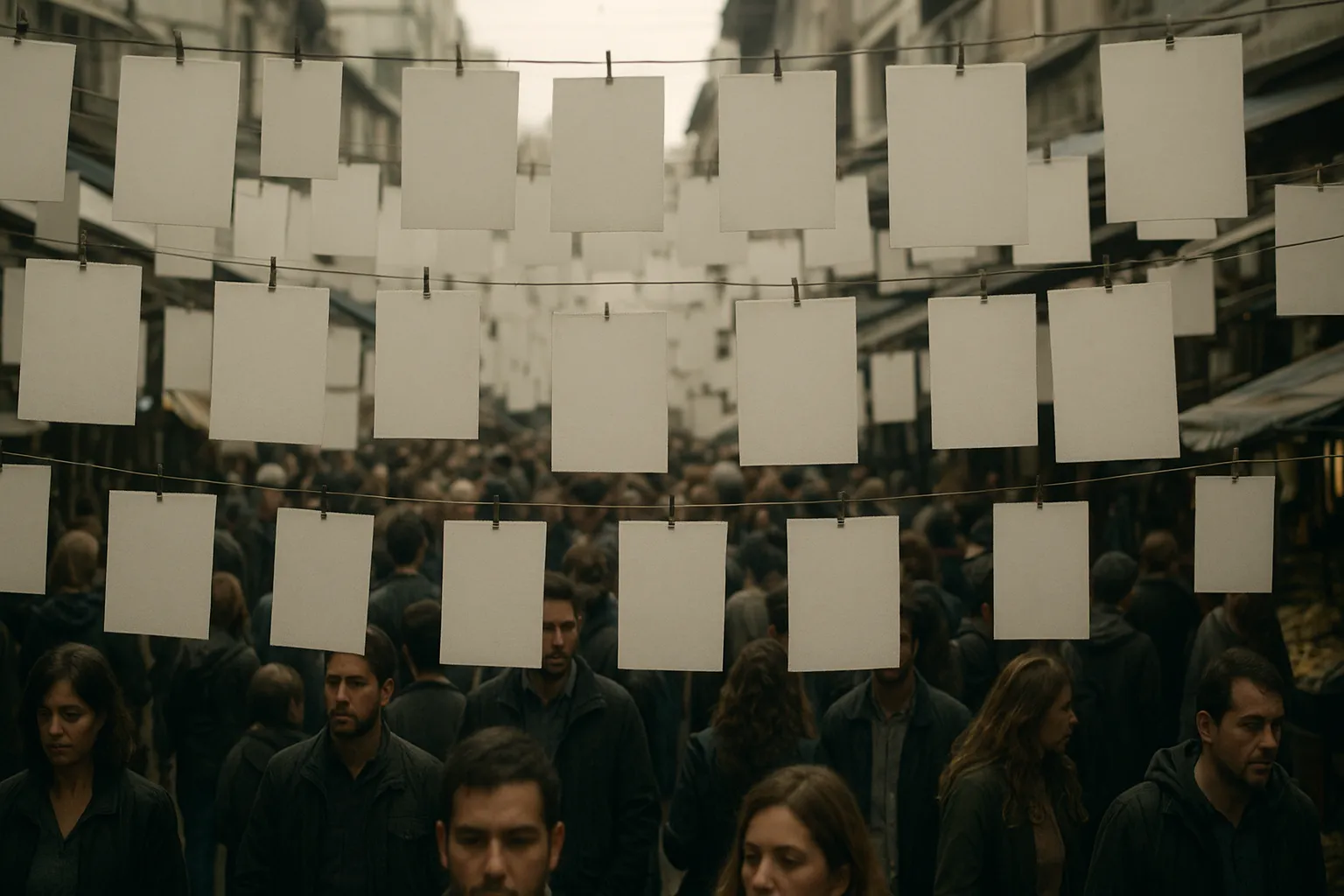
A lot of “anti-AI” policy feels like trying to freeze a river. It doesn’t stop the water. It just forces it to find another path.
The Real Axis Isn’t AI vs Non-AI. It’s Intent vs Spam.
The cleaner way to think about this is not how something was made, but why and at what scale.
There’s a huge difference between:
- someone using AI as part of a personal creative process
- an automated pipeline uploading hundreds of near-identical clips a day
- a scammer generating impersonation content
- a musician experimenting with a new sound palette
These shouldn’t all be treated as one category called “AI content.”
If platforms were serious, they’d target behavior:
- penalize mass-generated near-duplicates
- detect templated spam patterns
- reward audience retention over upload volume
- separate assistive use from fully automated farms
- label content rather than banning tools
That’s harder work than yelling “slop,” and it requires admitting a painful truth: ranking systems optimized for growth tend to promote whatever exploits them best.
AI didn’t create that problem. AI just makes it obvious.
The Scarier Part: The Shift From “Effort” to “Taste” (And Why That’s Not New)
Here’s where the conversation gets uncomfortable.
People keep describing this moment as a shift from effort-based legitimacy to taste-based legitimacy. As if we used to live in a world where hard work reliably produced advancement, and now suddenly everything is vibes.
But historically, legitimacy was always taste-based. We just disguised it as effort.
Take a simple, brutal example: a person who speaks flawless English gets picked for office jobs over someone who speaks with a Bhojpuri accent. It’s not just “communication.” It’s class signaling. It’s aesthetic preference dressed up as professionalism. The English speaker sounds competent according to elite norms, even when effort and intelligence are equal.
That’s why societies like India needed constitutional protections and reservations—because taste-based gatekeeping is sticky, and merit-talk alone doesn’t dissolve it. When the ladder is rigged, telling people to climb harder becomes a form of cruelty.
So no, the old world wasn’t purely effort-based. It was effort plus cultural fit plus credential access plus accent plus presentation—taste pretending to be neutral.
What AI Changes: It Removes the Effort Mask
AI doesn’t invent elitism. It removes the last comforting illusion that effort automatically converts into advantage.
Before, the promise was: grind long enough, learn the rules, acquire the polish, and you’ll enter the room.
Now AI can simulate polish quickly. It can generate the “right” phrasing, the “right” format, the “right” tone—instantly. That breaks a psychological contract: the belief that effort buys scarcity.
And once effort stops being a reliable differentiator, people feel something deeper than job insecurity. They feel meaning insecurity.
This is where the “moral panic” energy comes from. People aren’t only defending art. They’re defending the idea that hard work is a pathway.
So What Happens to the Masses Who Bet on Hard Work?
This is the question that won’t go away: what happens to the people who currently feel they have a pathway to a better life through effort?
A few things tend to happen, roughly in sequence.
1) Cognitive dissonance
People feel betrayed, but the betrayal is hard to name. They’re told:
- “Just learn prompts.”
- “Just be more creative.”
- “Just adapt.”
It sounds like merit talk, but it doesn’t offer a stable ladder—because the ladder keeps moving.
2) Moral backlash
When people can’t fight a system economically, they fight it morally. So you get:
- “AI is unethical.”
- “It shouldn’t count.”
- “Ban it.”
Sometimes the critique is valid. Often it’s grief wearing an ethics costume.
3) Political re-anchoring
Historically, when effort → status breaks, societies reach for substitutes:
- redistribution (protections, welfare, maybe one day UBI)
- credential inflation (new hoops to restore scarcity)
- cultural hardening (“real humans only”)
- scapegoating (machines, outsiders, whichever target is available)
Right now it feels like we’re oscillating between credential inflation and scapegoating AI.
Where I Think This Lands (Whether We Like It or Not)
AI bans won’t hold. Labeling will. Curation will become a bigger deal than production. People will stop asking “Was this made with AI?” and default to “Is this worth my time?”
But the real long-term fight isn’t aesthetic. It’s social. If effort stops being a believable route to dignity, societies will either build explicit support systems—or they’ll slide into resentment politics.
The platform panic is solvable. The social contract panic is not, at least not quickly.
Conclusion
The anti-AI mood isn’t really about protecting creativity; it’s about managing floodwaters and defending a shaky sense of fairness. AI didn’t create taste-based gatekeeping—it exposed it by making polish cheap and scale infinite. If we keep treating this as a morality play about “slop,” we’ll miss the bigger crisis: what happens when hard work no longer feels like a reliable promise.