
When a Brand Leaves Your Head
A vegan market forced Good Gut Hut to confront what matters on first contact: taste, clarity, and a simple pitch. The weekend didn’t make the brand bigger—it made it real.
Posted by
Related reading
Small Businesses Must Earn the Sale
Buying local should not require guilt or extra administrative work. Independent businesses thrive when distinctive products are paired with convenience, reliability and genuine customer value.
Soul Sante and the Unromantic Truth of Founding
A market stall day became a lesson in founder reality: when plans fail, you do the work; when you sell face-to-face, you get clean truth; and when you build, you lean on a village. Humility and connectedness aren’t soft values—they’re operational foundations.
What a Market Stall Taught Me About Masculinity
I went to Soul Sante expecting to sell pickles. Instead, I found a version of masculinity that had nothing to do with dominance or income. Standing in front of the stall, absorbing rejection and generating attention, I discovered that clean usefulness feels better than status ever did.
The weekend my brand stopped being “in my head”
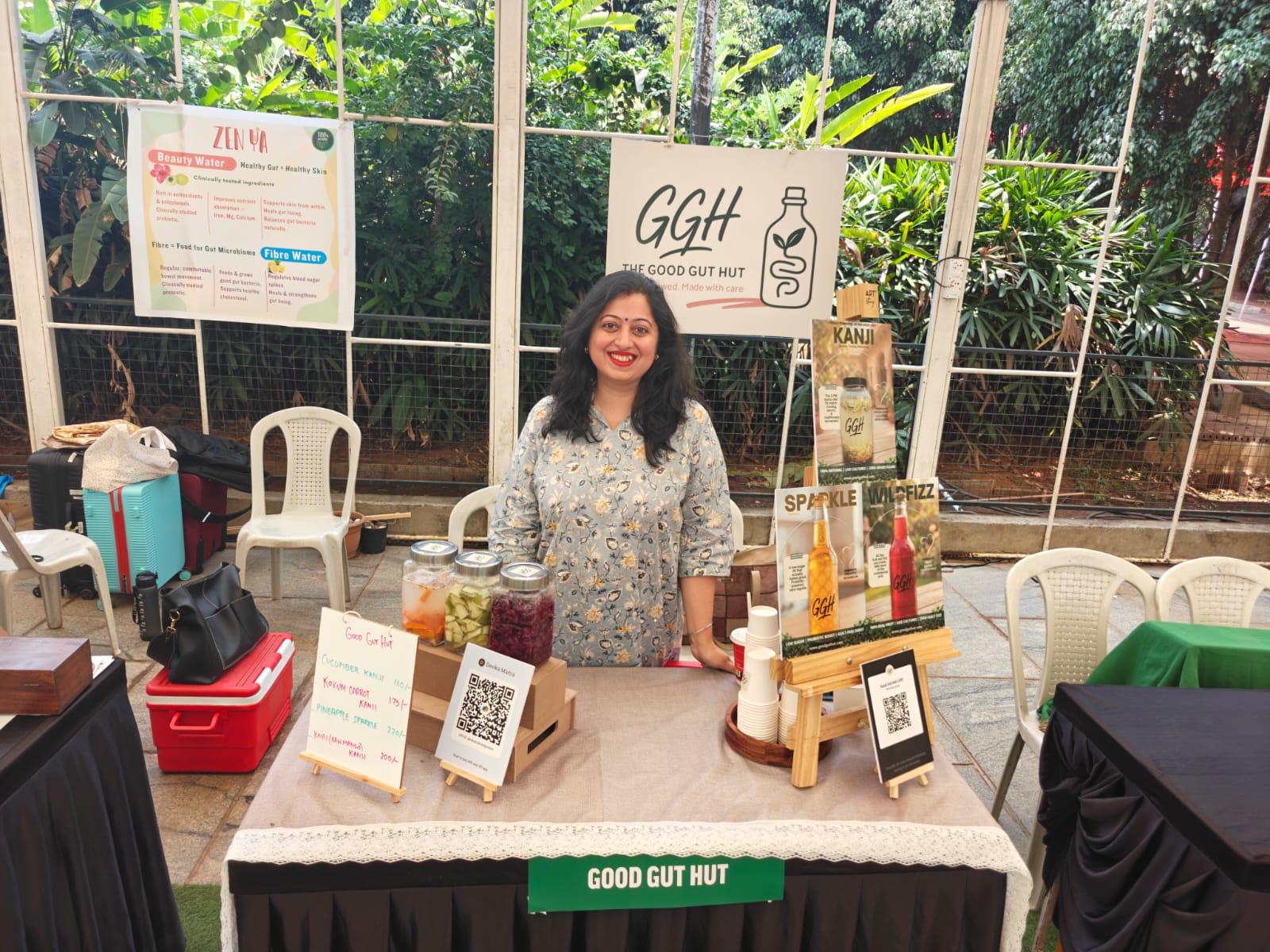 Good Gut Hut is three months old.
On paper, we already knew who we were. We had the why. We had the product logic. We had the category map and the neat little universe of how this all fits together.
But brands don’t become real on paper. They become real the first time strangers meet you—when they either walk past without a second thought or stop, taste, and look you in the eye like, “Wait. What is this?”
This weekend at a vegan market was that moment for us. Not because of revenue. Because for the first time, Good Gut Hut existed outside my head.
Why this market was different (and why it mattered)
This wasn’t a generic flea-market situation where people wander in for vibes and leave with whatever looks cute.
This market was a safe space for vegans—built on trust. They could buy without interrogating every label. And that trust wasn’t symbolic; they had vegan vigilance monitors who checked ingredients. That kind of scrutiny creates a rare environment: what you say you are, you must be.
But the bigger difference was cultural. People showed up expecting conversations. They were curious. They were intentional. And most importantly, they were honest—almost aggressively so.
It wasn’t a “polite market.”
It was a truth market.
Day 1: The market asked one question again and again
Day 1, people came up to the stall and asked the same thing:
- “Hi—what do you do?”
- “What is this brand about?”
- “Is this kombucha?”
Most people stopped. Some walked past (as they always will). We were generous with samples, and about 80% of the people we spoke to tasted. Around 95% actually engaged in conversation.
And here’s where it got uncomfortable: we were technically “performing well,” but our flow was messy.
I had designed the stall like a website.
There was a pre-order piece. There was a direct sales piece. There were multiple product lines, multiple categories, multiple ways to enter the brand.
In my head, it was beautifully structured.
In real life, it created friction.
Because at a stall, a product is a product. No one wants to decode your internal system while holding a cup for samples.
The moment I won’t forget
An industry expert—someone I’ve followed for years, long before I even knew I wanted a fermentation brand—came by, tried one of our beverages, and said:
“You crushed it.”
That line did something to me.
Not because it was praise (though I’ll take it). Because it was craft validation. If nothing else had happened that weekend, I still would have walked away happy just from that one interaction.
But the weekend wasn’t just highs. It was feedback—direct, specific, and sometimes blunt.
People didn’t sugarcoat. And weirdly, that made the whole experience feel safer.
The most humbling realization: story doesn’t carry a weak product
I walked into this market with a founder’s natural temptation: explain the philosophy, explain the craft, explain the layers.
But the market boiled everything down to something far simpler:
Does it taste good?
That’s it.
Not in a cynical way. In a deeply honest way.
In any values-led space—veganism, sustainability, cruelty-free—people love a good story. But they don’t buy effort. They buy outcomes.
I’ll say it plainly because I needed to hear it plainly:
A great story cannot compensate for a mediocre product.
I’m someone who cares about sustainability. My handbag is made from repurposed cloth scraps. I also spent a lot of money on it—happily. But I didn’t buy it because it’s made from waste. I bought it because it looks amazing and works brilliantly as a product. The story made it better. It didn’t carry it.
Same with food. Same with beverages. Same with us.
This market demanded quality because it attracted people with higher standards—people who make intentional choices daily, for themselves and for their children. Selling to customers like that is honestly a privilege, because they’ll engage deeply. But they are not forgiving. They expect you to take your work seriously.
And that weekend, we did.
What we learned about our customer (and what we got wrong)
We thought some of our sweeter products would be anchor sellers.
We had a beverage with sugar and we imagined it would fly because: this flavour doesn’t exist in the market, it’s fun, it’s different.
Reality: the moment we disclosed “this has sugar,” a lot of people opted out. Even jaggery had fewer takers.
Not because people were trying to be difficult. Because in this market, people are intensely aware of what they consume. They’re not just buying taste—they’re buying alignment.
We already knew that our customers want transparency. But we also learned something strategic: “new” isn’t enough. Interesting isn’t enough. Even “fermented” isn’t enough.
Alignment matters. Outcome matters. Repeatability matters.
The kombucha problem (and the clarity problem)
A few people assumed we were selling kombucha. And that was useful because it exposed something deeper: our pitch was too intellectual.
We can explain fermentation. We can explain process. We can explain the “why.”
But we didn’t have the most basic thing locked:
A one-line explanation of what we are.
If people need a paragraph to understand you, you’ve already lost them.
Day 1 showed us that our brand identity might be clear to us—but it wasn’t landing cleanly on first contact.
The most surprising part: generosity, not competition
I didn’t expect the openness.
People gave feedback freely—ideas, resources, suggestions—without ego, without credit-seeking, without “you owe me.”
It made me reflect on myself in a slightly uncomfortable way.
Sometimes when I walk up to other stalls, I can feel my insecurity show up. I’m a new founder. I can get guarded. I can get performative.
This market made that feel unnecessary.
There was even another brand selling a limited-edition kanji, and my reaction wasn’t panic. It was joy. “You make kanji too? Amazing. Come try ours.”
That’s what a healthy ecosystem feels like: not ridiculously competitive—just collectively serious.
And I think that came from the market itself. It positioned clearly (“vegan, no compromise”), didn’t people-please, and attracted people who were aligned. Clarity creates culture. Culture shapes behavior.
Day 2: focus, flow, and a sell-out
Day 2 we changed one thing that changed everything:
We focused.
We led with kanji. We mentioned we also have a pineapple sparkle (because it’s replicable and consistent), but we didn’t try to showcase everything we’ve ever made.
We simplified our pitch. We led with tasting. We connected with people as people.
And most importantly: we sold something we know works.
We didn’t keep kanji as a “sample now, pre-order later” concept. We made it purchasable. People tasted, liked it, and bought on the spot. Some came back: “Yesterday I tried this—today I want that.”
They brought other people. At the end of the day, as we were wrapping up, someone literally pulled in a sister-in-law. We had one bottle left and gave it to her.
We sold out.
Not because we got louder. Because we got clearer.
What this weekend actually changed
This market didn’t change what Good Gut Hut is. It brought us back to it.
We started as a gut-friendly, kanji-forward beverage brand—built for people who are intentional about what they consume. Somewhere along the way, we got carried away building complexity: product universes, categories, frameworks.
The market didn’t care about our internal architecture.
It cared about whether the beverage was good.
And once the beverage was good, people cared about the story.
Also: we’re not vegan personally. But our brand is plant-based, and we respect the space we were in deeply. More importantly, we realized something: this isn’t just a “vegan market.” It’s a high-intention market. Vegan communities are one of the strongest expressions of intentional consumption—and that overlaps heavily with the exact kind of customer we built for.
Conclusion: the brand got simpler, and that’s the point
Day 1 gave us truth. Day 2 gave us proof. Together, they gave us a working model: lead with what converts, let taste do the talking, and earn the right to tell the story second.
Good Gut Hut didn’t become bigger that weekend. It became more real.
And honestly, that’s the only kind of growth that matters this early.