
When Beauty Gets Annexed
In India, natural beauty often gets reclassified as sacred territory—bringing social control, gatekeeping, and conditional access. The Kasol crackdown exposes a deeper conflict: transcendence that doesn’t kneel threatens systems built on supervised meaning.
Posted by

Related reading
MCU Thor and Norse Myth: Shared Names, Different Logic
Marvel’s Thor borrows real Norse names and symbols, but swaps the myth’s tone, family ties, and fatalistic cosmology for superhero storytelling. That same “remix” approach is rarer with Indian mythology because it’s a living, devotional tradition with higher cultural and political stakes.
The Odyssey Casting Debate Is a Trust Crisis
The loudest reactions to The Odyssey’s casting aren’t really about diversity or mythic reinterpretation—they’re about audience trust. When studios deny obvious signaling and moralize disagreement, even defensible artistic choices start to read like propaganda.
Abundance Doesn’t Calm Factions It Supercharges Them
Fallout’s pre-war world suggests prosperity doesn’t automatically reduce extremism—it expands what powerful, insulated factions are capable of attempting. When high capability meets low trust and concentrated power, “total solutions” start to look rational.
When Beauty Gets Annexed
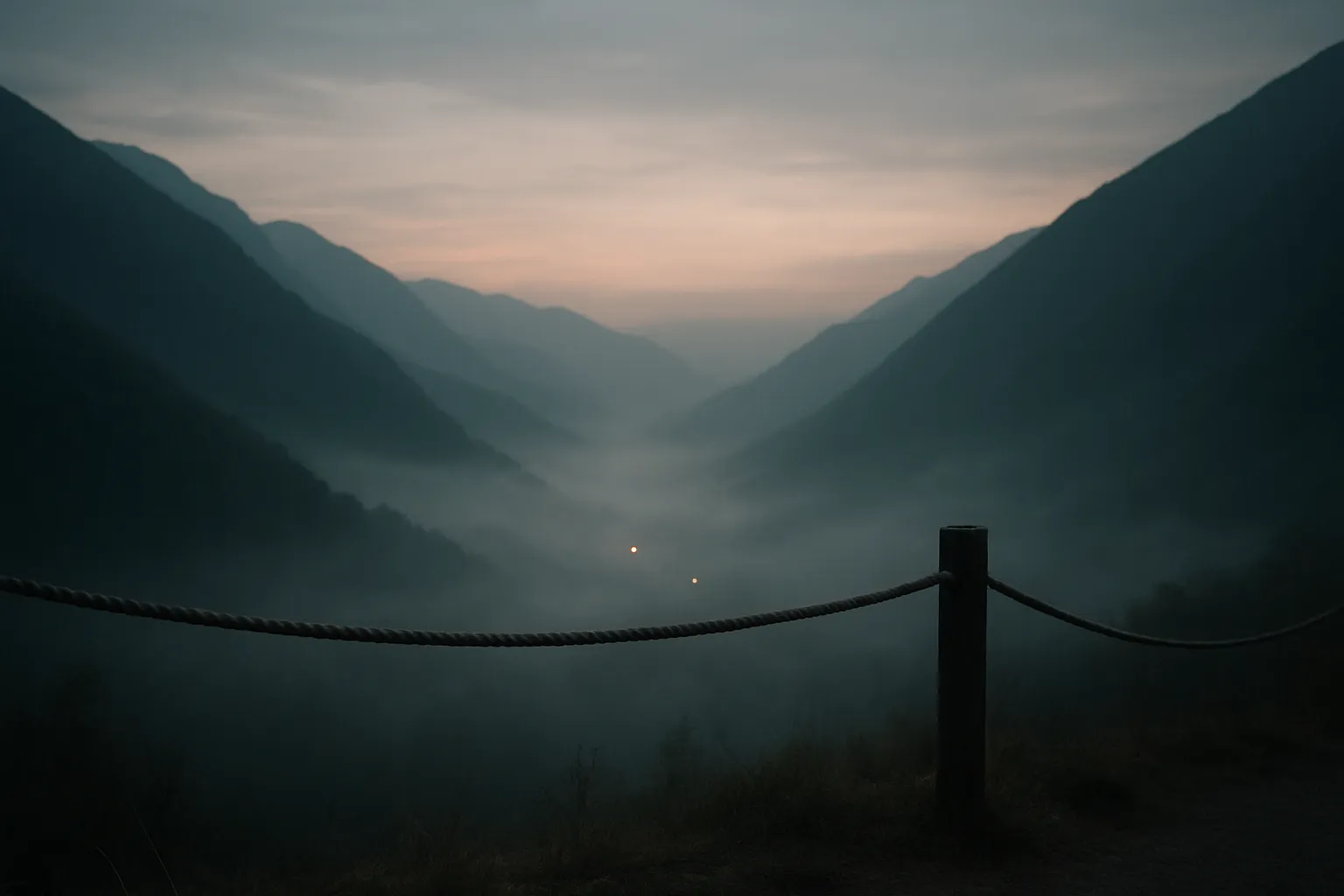
There’s a pattern I can’t unsee anymore: in India, any place with natural beauty eventually gets annexed by religion. Not necessarily because someone is pious. Often because religion is a ready-made language for claiming land, controlling behavior, and deciding who gets to belong.
A river stops being a river and becomes a “mother.” A mountain stops being a mountain and becomes a “seat” of something. A quiet forest stops being a forest and becomes a “tapasya zone.” Once that shift happens, access is no longer simple. It becomes conditional.
And then the rules show up.
Not environmental rules. Not “leave no trace.” Not “keep it clean.” It’s always social rules first:
- don’t sit there
- don’t wear that
- don’t come at this time
- don’t speak like this
- don’t exist casually
The place stops being a commons. It becomes a controlled ritual zone.
This is what makes it suffocating: the loss of unmediated access to awe. No priest. No script. No permission. Just you and the place. India offers fewer and fewer spaces where you’re allowed that without paying a social or religious tax.
The Kasol Grief Is Not Just Nostalgia
This is where my resentment gets personal.
Kasol wasn’t perfect, and it wasn’t “pure,” and pretending it was some utopia would be dishonest. But it did function as something rare in India: a temporary autonomous zone. A small pocket where the default mode wasn’t obedience.
It was a techno paradise in the sense that mattered: people gathered around rhythm, not hierarchy. A mixed crowd—different languages, classes, countries—sharing music, long conversations, altered states, and that strange honesty you sometimes get at 3 a.m. when nobody is trying to win.
No priesthood. No sermon. No gatekeepers who get to decide what your joy means.
And now the vibe is: these religious assholes want them out.
The crackdown energy is never subtle. It’s moral. It’s righteous. It’s territorial. It isn’t “this ecosystem is fragile” (which would be a real argument). It’s “this is impure.” It’s “our culture.” It’s “protect the sanctity.”
Sanctity is just a cleaner word for control.
The Real Collision: Two Kinds of Transcendence
The thing nobody says out loud is that techno/rave culture accidentally does what religion claims to do. That’s why the reaction is so aggressive. Not because the music is loud. Not because foreigners exist. Not even primarily because drugs exist.
Because it competes.
Look at the overlap without flinching:
- congregation
- trance
- collective emotion
- loss of ego
- sacred time (a night that feels set apart from ordinary life)
- symbolic space (the floor, the lights, the sound)
If you define religion anthropologically—ritual, repetition, altered states, communal meaning—then yeah: a dance floor can qualify. Not as a joke. As a serious human thing.
Techno is ritual without theology.
And that’s exactly what makes conservative systems panic. There’s no moral authority in the room. There’s no central interpreter. No one is required to kneel to make the experience legitimate.

So the delegitimization starts. They label it corruption, decadence, Western rot, drug culture. They frame it as something that must be expelled for the “health” of society. It’s an old move: if you can’t control a form of transcendence, you call it poison.
Why It Feels Like India “Only Tolerates Transcendence That Kneels”
This is the deeper cultural wound behind my anger.
India has space for spirituality, but it’s a very specific kind of spirituality: the kind that submits to a structure. The kind that comes with sanctioned narratives, sanctioned bodies, sanctioned behavior. You can have ecstasy—if it’s supervised.
But collective joy that liberates the body and equalizes people? Joy without guilt? Trance without intermediaries? That gets treated as a threat. Something to be disciplined.
That’s why the hypocrisy is so loud:
- a loud temple is “culture”
- a silent dance floor is “decadence”
It’s not about volume. It’s about permission. Who is allowed to run the meaning factory?
The Tragic Irony: “Preservation” That Destroys the Place
Religion often claims to preserve these places. Sometimes it does in specific ways, especially when it discourages certain forms of exploitation. But the overall pattern is grimly ironic.
What gets preserved is power over the place, not the place itself.
You can see it in the common outcomes:
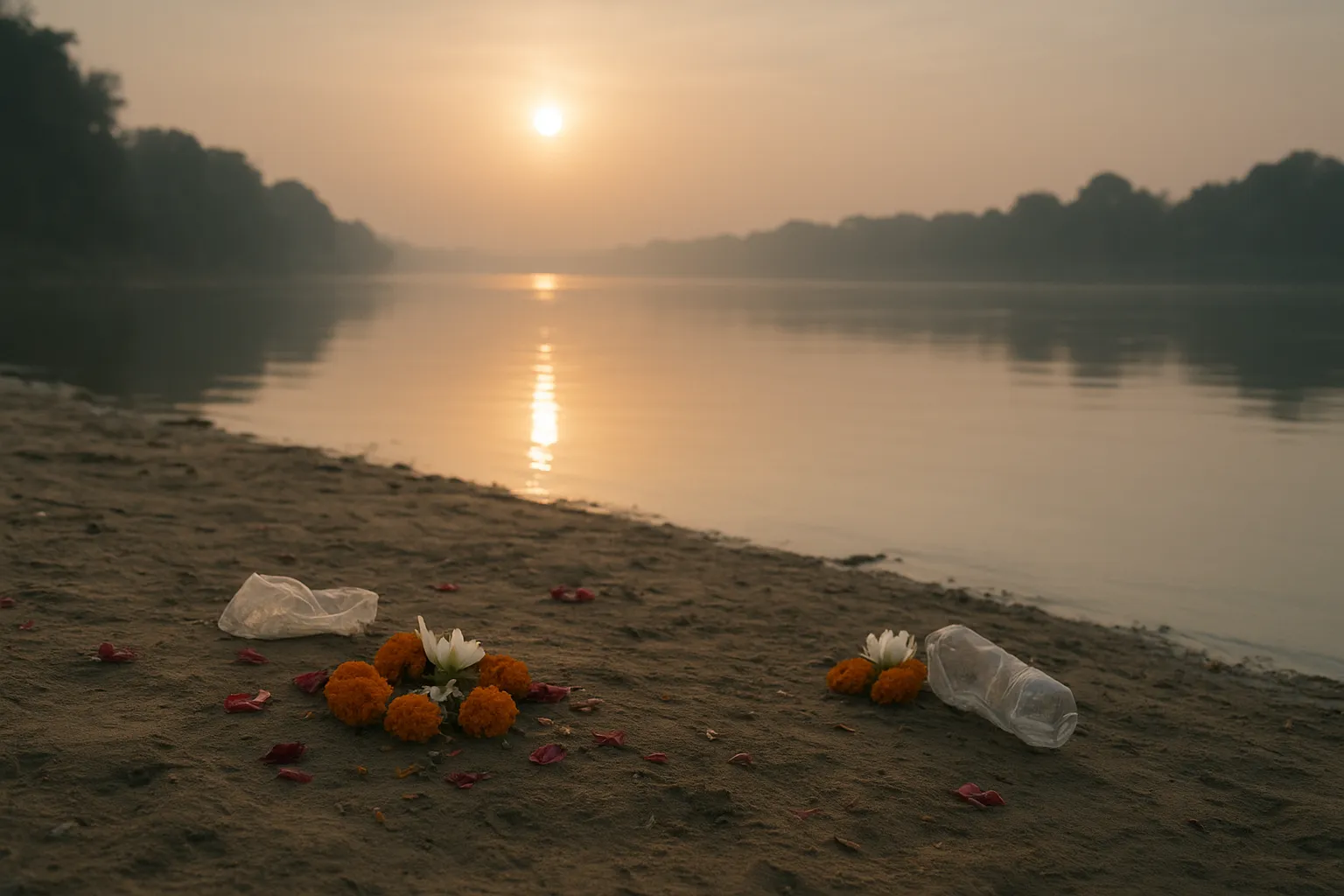
- plastic offerings and trash accumulating in “sacred” water
- loudspeakers where silence was the point
- crowds where solitude was the value
- moral policing replacing environmental care
If the goal were truly conservation, the rules would center ecology. Instead, the rules center obedience. Sanctity is easier to police than plastic.
And this dynamic isn’t limited to Hinduism or any single faith. It’s what happens when religion becomes the default property manager in a context where civic institutions are weak. Where governance fails, religion fills the vacuum: authority, enforcement, legitimacy, control.
“Should Techno Get Religious Status?”
I get the impulse. If religion is the only language the state respects, then demanding religious status for techno feels like a hack: fine, you want sacred? We’ll give you sacred. Let us congregate.
But there’s a trap in that framing.
The moment you ask for religious status, you implicitly accept the idea that collective meaning needs divine validation—or at least an officially recognized doctrine. You invite the very things that make religion oppressive in practice:
- committees
- authenticity tests
- gatekeepers
- sanctioned rituals
- someone deciding what counts as “real” techno devotion
Techno loses the moment it kneels for legitimacy.
Also, practically: states don’t like opening the door to “anything can be a religion.” Even if you could craft a formal structure, courts and bureaucracies tend to look for doctrines, continuity, moral codes, recognized leadership—exactly the stuff rave culture resists by design.
So if the question is “can techno be declared a religion,” the real answer is: even if you could, you probably shouldn’t.
A Better Demand: Stop Letting Religion Monopolize the Sacred
The stronger claim isn’t “techno is a religion.”
It’s: people have a right to collective joy, non-violent congregation, and altered states without ideological supervision.
That’s a civilizational demand. It says: meaning is not the monopoly of temples. Transcendence is not proprietary. Awe is not something you must purchase by performing obedience.
Techno doesn’t need legitimacy from religion. Religion fears techno because it proves legitimacy can exist without authority.
If You Want This To Survive, It Has To Stop Being Easy To Demonize
Kasol was fragile because it was outsider-coded and symbolically convenient to attack. When something is framed as “foreigners + drugs + moral decay,” it becomes politically cheap to crush. Even if the same substances exist elsewhere, even if the same money flows elsewhere—this one gets to be the sacrificial site.
If a Kasol-like scene ever survives long-term, it won’t survive as permanent rebellion. It survives by embedding. By becoming boring infrastructure. By being defensible in adult language.
Not religious language. Civic language.
Frames that are harder to swat down include:
- culture and art: music, dance, community gathering as legitimate expression
- public assembly: non-violent congregation as a basic freedom (even if unevenly respected)
- harm reduction and safety: self-regulation, medical readiness, consent culture, de-escalation
- local livelihood: not as “tourism,” but as actual economic interdependence that makes crackdowns costly
None of this is romantic. It’s not as satisfying as declaring a Church of Bass and demanding exemptions. But it’s closer to how the world actually works: what gets protected is what can be normalized, defended, and woven into a local ecosystem without becoming an easy moral punching bag.
Conclusion
My anger isn’t really about partying. It’s about who gets to decide what counts as sacred, and why natural beauty and collective joy keep getting turned into controlled territories. Kasol hurts because it proved, briefly, that people can gather without a priest, without obedience, and still find meaning. The fight isn’t to make techno a religion—it’s to stop letting religion be the only recognized shape of human transcendence.