
Why Your Cat Slow-Blinks During Zoomies (It’s Not Sleepiness)
If your cat slow-blinks while racing around the house, he isn’t getting sleepy. It’s a trust signal — your cat can be physically hyper while still emotionally relaxed and safe with you.
Posted by

Related reading
When Kibble Suddenly Becomes Unbearable: Teething, Not Drama
If your kitten still has an appetite but refuses dry food, clings to you, and starts chewing wires, mouth discomfort is the first thing to suspect. A short teething phase plus adolescent chaos is often the real culprit—managed with softer food, safer chew options, and tight cable control.
When Your Cat Meows for Food but Wants Something Else
If your cat keeps meowing after being fed—then sprints off like a caffeinated gymnast—it’s often not hunger. It’s a learned “meow = human reacts” loop that’s better solved with play, attention, and consistency than extra meals.
When a Cat “Quacks” When Picked Up
A new raspy croak or duck-like sound during pickup is often a clue about discomfort, handling mechanics, or (less commonly) throat irritation. Adjust how you lift, watch for subtle pain or breathing signs, and escalate to a vet visit if it persists or worsens.
My Cat Slow-Blinks During Zoomies. Is He Sleepy or What?
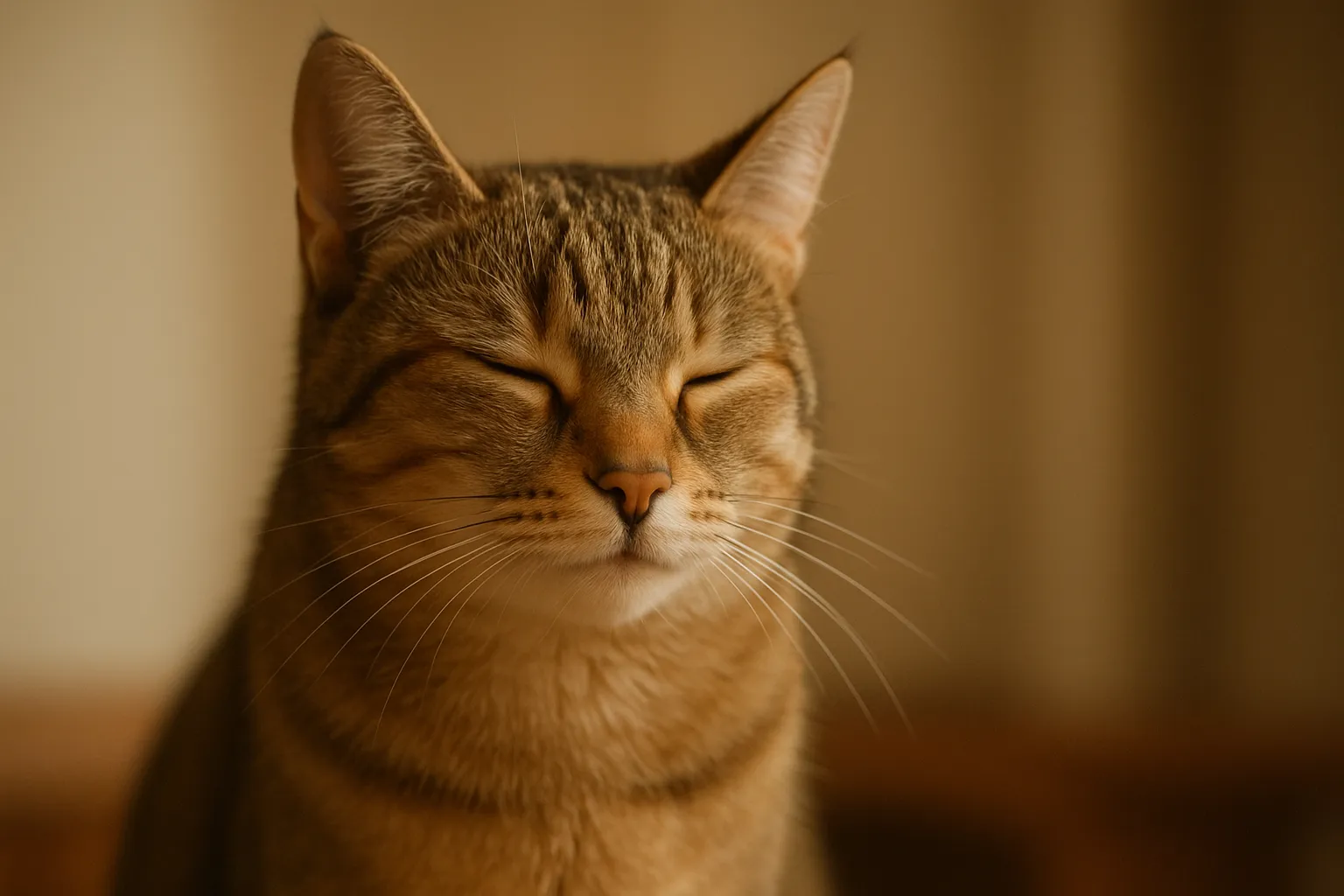
One of the funniest contradictions in cat ownership is watching a creature rocket around the living room like a furry pinball… and then casually give you the softest, sleepiest-looking slow blink. It feels like the signals don’t match. If he’s blasting through a set of zoomies, shouldn’t his eyes be wide and wild?
Not necessarily. A slow blink isn’t your cat “getting drowsy.” It’s communication. And it can show up even when the rest of his body is in full chaos mode.
The Slow Blink Isn’t About Sleep — It’s About Safety
Cats are built to be cautious. In the animal world, closing your eyes (even halfway) is basically choosing vulnerability. You can’t watch for threats if your eyelids are down. That’s why the slow blink is such a strong social signal in cat language: it’s a visible way to say, “I’m not on high alert with you.”
When your cat slow-blinks at you, what he’s usually expressing is something like:
- I feel safe here.
- I’m relaxed around you.
- I’m not worried you’ll hurt me.
- I’m not trying to escalate anything.
It’s the opposite of a stare-down. A hard, unblinking stare is tension. A slow blink is softness. If your cat is slow-blinking at you, he’s not “checking out.” He’s checking in.
Zoomies Don’t Cancel Calm
Here’s the part humans get wrong: we treat energy as the same thing as stress.
Zoomies are often just physical energy needing an outlet. That energy can come from boredom, excitement, routine (hello, 11 p.m. racetrack), or pent-up play drive. But it doesn’t automatically mean your cat is emotionally frantic. A cat can be:
- physically hyped, and
- emotionally comfortable
at the same time.
Think of zoomies less like panic and more like a sudden urge to sprint. The vibe isn’t “I’m terrified.” It’s “I have a lot of rocket fuel and nowhere to put it.”
So if your cat barrels past you, skids into a turn, and then slow-blinks like a little angel? That’s not a contradiction. That’s a cat saying, “Everything is great. I’m just doing my laps.”
Eye Shape Doesn’t Always Track Arousal
People expect “excited” to equal wide eyes, but cat eyes are more complicated than that. Wide, round eyes can happen during play, sure—but they’re also common in fear, uncertainty, or intense hunting focus.
Meanwhile, many cats run around with softer eyes because they’re not threatened. Some cats just naturally keep a relaxed squint as their default expression, even while they’re mid-pounce.
A helpful way to think about it:
- Wide eyes often mean heightened vigilance (fear, surprise, high focus).
- Soft eyes / squinty eyes often mean comfort (low threat, relaxed engagement).
- Slow blink is a deliberate social cue (trust, friendliness, peace).
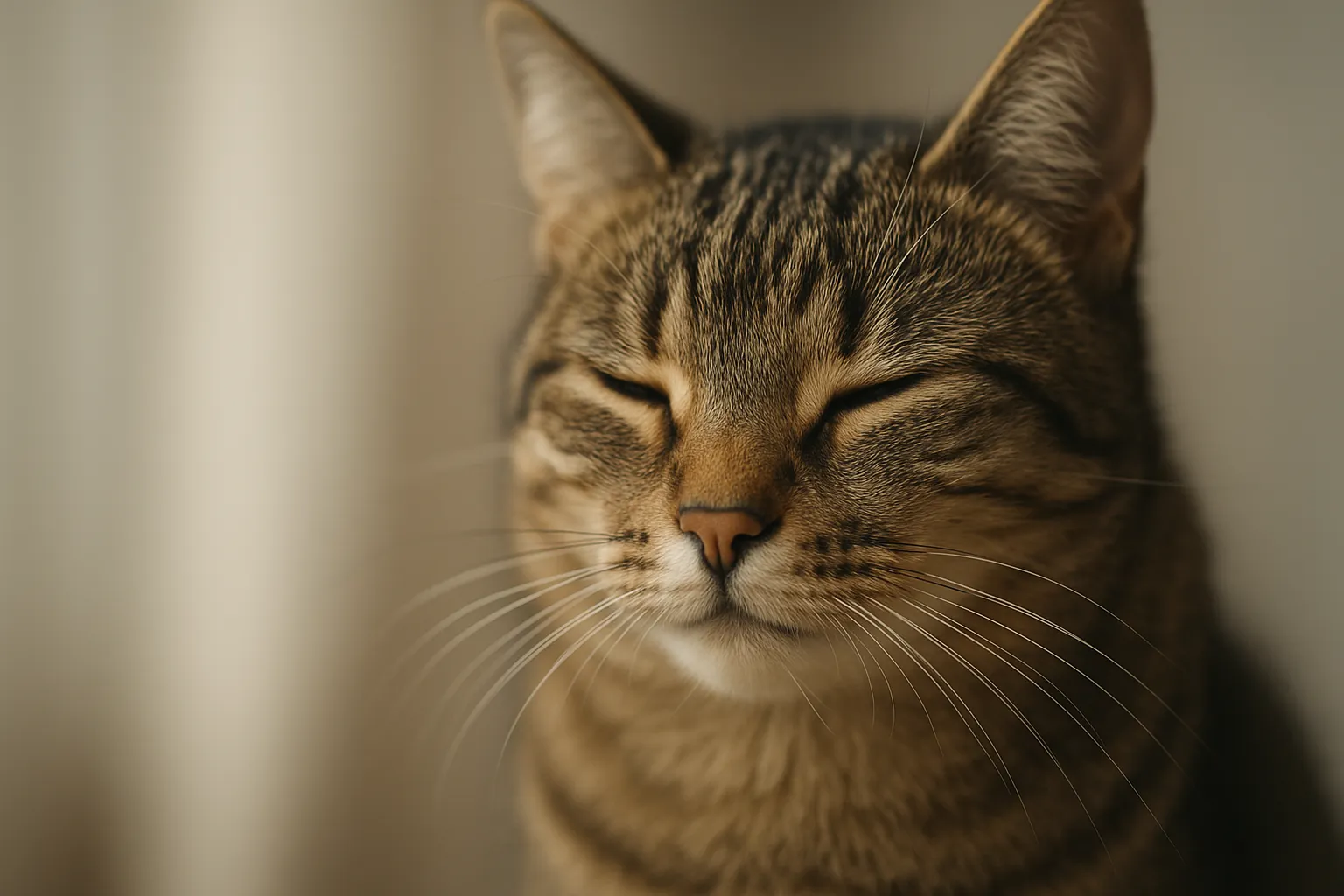
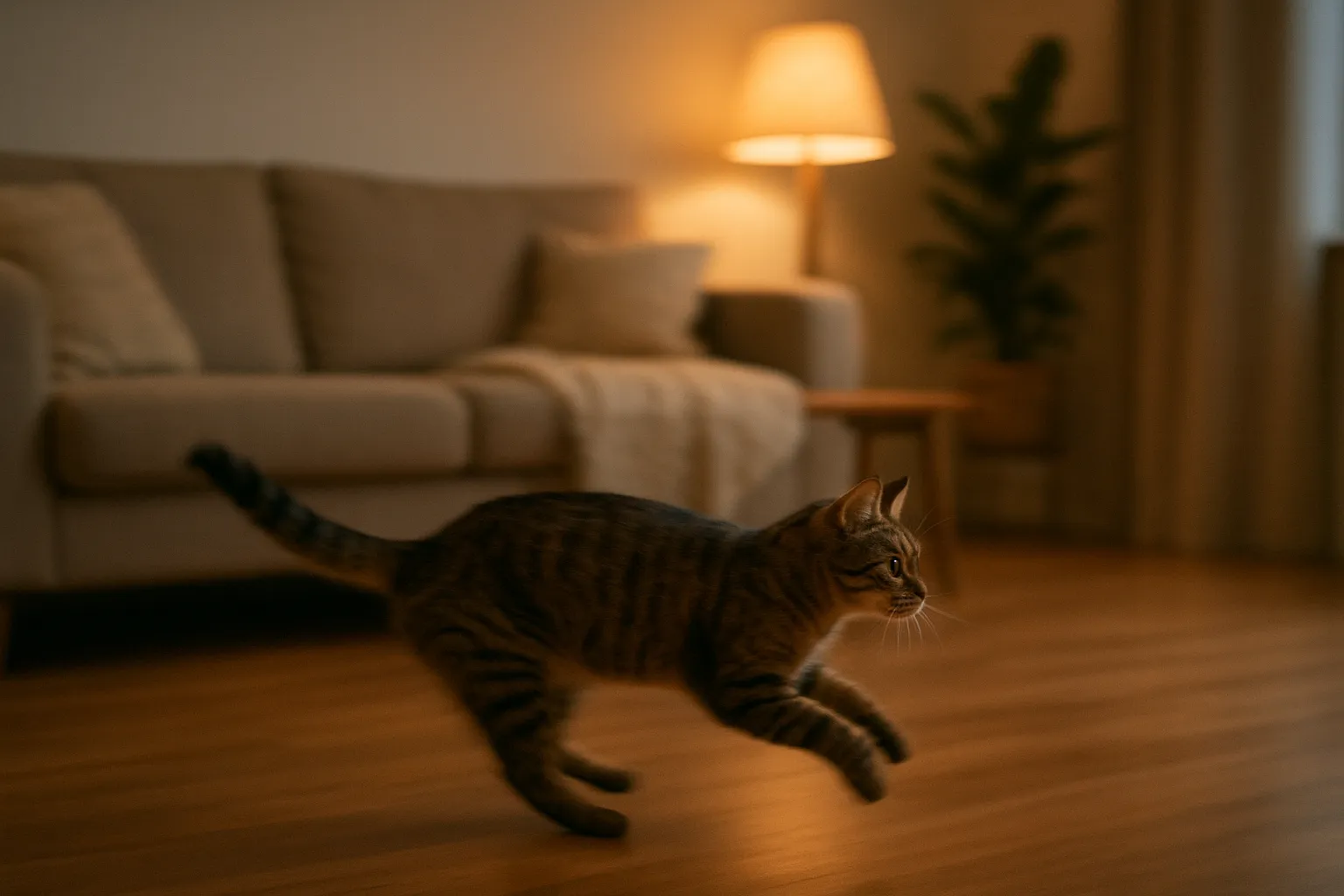
So a cat can be racing at top speed while still wearing a “no drama here” face. Cats are weird like that. It’s part of the charm.
What Your Cat Might Be Saying During the Slow Blink
The slow blink can land differently depending on the moment. If your cat slow-blinks mid-zoomies, it’s usually not “I’m tired,” it’s more like one of these:
-
“I’m playing, not fighting.”
Some cats throw social signals into the mix to keep the mood friendly—especially if you’re nearby and watching. -
“You’re part of the safe environment.”
The fact that he can be wild while still offering a calm signal is basically a compliment. He’s not worried about what you’ll do. -
“I’m amped, but I’m not stressed.”
Zoomies can look intense, but a slow blink is a sign the intensity is playful, not anxious. -
“I see you.”
Cats are not always big on obvious affection. A slow blink is a quiet little acknowledgement that still says a lot.
And yes, you can slow-blink back. It’s one of the simplest ways to “speak cat” without getting up from the couch.
Zoomies: Happy Chaos vs. Agitated Chaos
Not all high-energy behavior is the same. Zoomies can be pure joy, or they can be an outlet for frustration. The difference is usually in the rest of the body language and the context.
Happy chaos tends to look like:
- quick sprints with playful bounces
- rolling, sliding, skidding, goofy parkour
- playful stops and starts
- normal appetite, normal social behavior afterward
Agitated chaos might come with:
- puffed tail or persistent piloerection (fur standing up) beyond a quick flare
- ears pinned back for long stretches
- low growling or defensive vocalizing (not just chirps/meows)
- hiding immediately afterward, avoiding contact, acting “off”
A slow blink, especially if it’s paired with loose body language, usually points toward the happy category.
The One Time a “Sleepy” Look Can Matter
Even though slow blinking is generally a good sign, it’s still worth using your common sense. Cats also squint when their eyes are irritated or when they feel unwell. The difference is that medical squinting doesn’t look like a relaxed social gesture—it looks uncomfortable or asymmetrical, and it usually comes with other signs.
Pay attention if you notice any of this alongside the blinking/squinting:
- eye discharge (clear, yellow, green)
- redness, swelling, or visible irritation
- pawing at the eye or rubbing the face more than usual
- one eye more closed than the other
- lethargy, hiding, loss of appetite
That’s not “trust blinking.” That’s “something might be bothering me” blinking.
But if your cat is bright, active, eating normally, and still doing his usual routine—then the slow blink is almost certainly just social communication.
Why It Feels So Personal (Because It Kind of Is)
Cats don’t throw out vulnerability signals for no reason. In a multi-cat household, you’ll see how loaded eye contact can be: staring becomes tension fast. Cats manage relationships through subtle, polite cues—looking away, softening the gaze, blinking slowly.
So when your cat slow-blinks at you, it’s not random. It’s a tiny moment of connection that says, “We’re good.” The fact that he does it even while he’s possessed by the spirit of speed is just proof that his internal world has more than one channel open at once.
He can be a maniac and still be at peace.
Conclusion
A slow blink during zoomies usually isn’t sleepiness—it’s your cat signaling comfort and trust while he burns off energy. Zoomies are physical release; slow blinking is emotional tone. If he’s otherwise healthy and acting normal, it’s a reassuring sign, not a confusing one. The best response is simple: slow-blink back and let him keep being wonderfully ridiculous.