
How to Convert ChatGPT Conversations Into Blog Posts
Want to convert a ChatGPT conversation into a blog post? Here’s a simple step-by-step workflow to turn raw chat threads into clean, publishable articles.
Posted by

Related reading
When Voice Cloning Becomes Accent Caricature
AI voice cloning can preserve a speaker’s timbre while replacing their pronunciation and cadence with a demographic stereotype. Treating Indian English as a single preset turns personalization into systematic misrepresentation.
Cameras and microphones capture well-defined physical signals, while smell and taste emerge from complex chemical patterns. Electronic noses and tongues exist, but their sensors and AI remain specialized rather than universal.
AI Product Demos Need UI Understanding, Not Just Editing
Most “AI demo” tools are just smarter screen recorders working on pixels. The real leap is treating the interface like a scene—auto-directing zooms, pacing, and highlights based on what the UI elements mean.
Some of the best thoughts I’ve had recently didn’t happen in a notebook or a doc.
They happened in a ChatGPT thread.
That’s a weird sentence to admit out loud, but it’s true. The format is addictive: you ask something half-formed, it asks you to clarify, you argue, it pushes back, you go deeper. Before you know it, you’ve built an entire mental model of a topic you were only vaguely curious about an hour ago.
And then the thread just… sits there.
Not shared. Not searchable. Not something you can point people to without sending them a wall of chat logs. Most of the time, those conversations are basically trapped. They contain some of your best thinking, but they’re stuck in a place that isn’t really designed for publishing.
This is how I convert a ChatGPT chat into an actual article.
The problem: great ideas trapped in chat format
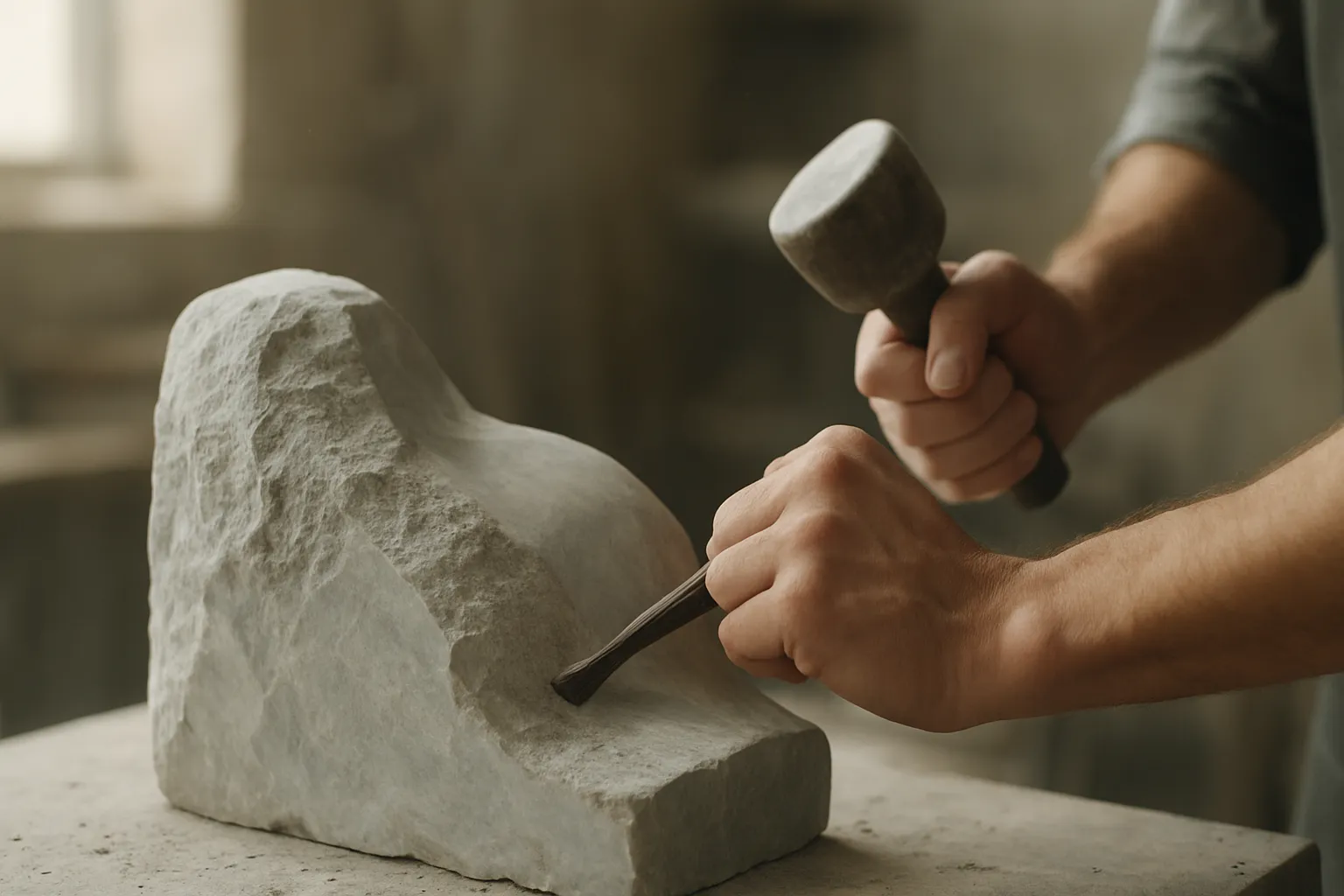
Chat is a great interface for generating and refining ideas, but it’s a terrible format for publishing them.
A chat has:
- repeated questions and restatements
- tangents that are useful while thinking, but distracting for a reader
- “working memory” logic (stuff referenced five messages ago that a new reader won’t have)
- rough edges, contradictions, and half-finished threads
Even when the content is genuinely good, the format isn’t.
Which is frustrating, because some of the most interesting writing happens in that messy middle. It’s not an essay yet, but it’s also not nothing. It’s closer to raw ore than to a finished tool.
A real example: interstellar travel (and the depressing part)
A few days ago I was brainstorming whether interstellar travel was ever possible. Not in a sci-fi “warp drive next Tuesday” way, but in the “what does physics let us do if we’re serious?” way.
The conversation started bleak.
ChatGPT basically told me: if it’s possible at all, it might take millions of years. And that’s the kind of thought that lands with a thud, because it forces you to face a hard constraint:
Nothing travels faster than light.
So if you want humans to reach other stars, you’re kind of stuck with a menu of options that all sound like fantasy on first read:
- invent “magic” (aka new physics)
- learn to use stars like a battery (build infrastructure on a scale that feels absurd today)
- or become a species that can survive journeys that last so long they stop feeling like “journeys”
It’s depressing because it makes you feel small. Like we’re trapped in our neighborhood forever.
But then the conversation took a turn.
Instead of focusing on the dream of hopping between stars, it suggested something more interesting: maybe the real expansion isn’t outward at first.
Maybe the future looks like building thousands—maybe millions—of huge, country-sized habitats around our own solar system.
Not Mars. Not a single moon base. Not one giant ringworld (also basically magic).
A distributed civilization made of “a million little Earths.”
That idea led to a rabbit hole of details: what those habitats might look like, how you’d power them, how they’d govern themselves, what kind of scale you’d need, what actually seems plausible vs. just pretty concept art.
And that’s the kind of thread that’s worth turning into something permanent.
I linked the original post/conversation here: A Million Little Earths (Not Mars)
But the bigger point is this: chats like that shouldn’t die as chats.
What I want instead: turn the thread into a real post
A good article isn’t just “the same content but cleaned up.”
It’s structured.
It has a beginning that pulls you in, a middle that builds the case, and an ending that lands somewhere. It removes the back-and-forth friction of a chat while keeping the best part: the thinking.
That’s what I’m trying to do when I convert a thread into a post:
- keep the strongest ideas
- keep the voice (the opinions, the awe, the frustration)
- remove repetition
- turn the scattered moments into a coherent narrative
And crucially: publish it somewhere indexable.
Because otherwise it’s just private epiphany theater.
The workflow: how I turn a ChatGPT chat into an article
Here’s exactly what I do.
-
Open the ChatGPT thread.
Find the conversation you want to turn into a post. -
Select everything and copy.
On desktop:Ctrl + A, thenCtrl + C.
(Basically: grab the whole thing. Don’t overthink it.) -
Go to the post creator.
Open: https://thinkinpublic.app/create
If you aren’t logged in, it’ll prompt you. If you are logged in, it just opens. -
Paste the chat.
Dump the entire conversation into the editor. -
Click “Generate Post”.
Agree to the terms and conditions (the usual) and start the generation. -
Watch the post stream into existence.
This is the satisfying part. A new page opens and the article begins forming.
The flow is roughly:- the main body gets drafted first
- then the title and excerpt are created
- then media placeholders appear
- then those placeholders resolve into images (from the internet or AI-generated)
You don’t have to do anything during this. Just wait until the pictures show up.
-
Edit what you want.
Change phrasing. Remove parts that feel repetitive. Add a better opening. Delete anything that doesn’t belong. Swap images. Remove images. Save as a draft if you want to come back later. -
Publish.
Click “Publish” and you’re done.
Viola.
Your messy, high-signal brainstorming session becomes a readable blog post.
Why this is worth doing (beyond “it’s cool”)
The immediate benefit is obvious: you get a post without staring at a blank page.
But the long-term benefit is bigger: you’re building a public library of your thinking.
A chat thread is private and disposable. A published post is:
- linkable
- searchable
- indexable
- something you can reference later without digging through old conversations
And if you keep doing it—if you keep publishing thoughts on a theme—your profile starts to accumulate real authority. Not authority in the “I’m an expert, trust me” way, but in the “I’ve clearly spent time thinking about this, here’s the trail” way.
Google can index it. People can find it. Future-you can find it.
That matters.
A small mindset shift: don’t treat chats as drafts—treat them as raw material
The mistake is assuming you need to “write an article” from scratch.
Often the best writing doesn’t come from typing into a pristine document anyway. It comes from wrestling with ideas until something clicks. Chat just happens to be a surprisingly good arena for that wrestling match.
So the goal isn’t to copy/paste the chat as-is.
The goal is to extract the actual shape of the idea and publish that.
Chat becomes the quarry. The post becomes the building.
Conclusion
A lot of people are using ChatGPT to think, but then leaving the results buried in threads. That’s a waste. If a conversation genuinely sharpened your thinking, it deserves to exist outside a chat window. Copy the thread, generate a draft, edit it like a human, and publish it where it can be found again. The point isn’t to “make content”—it’s to stop losing your best thoughts to the scrollback.